

The downsides of fitness
The first thing we would like to highlight is that many of the following issues we discuss are based on the athletes’ own experiences and some of the information is referenced. Everyone experiences the sport in their own way and everyone will certainly have their own challenges in the sport, if any. However, it is important to remember that there are not always downsides! We just want to highlight any potential downsides that you should be aware of when you are starting out in the sport.
In the off-season I have not experienced anything negative and everything went as planned. The biggest problem in the off-season was mainly how to eat all the food I was supposed to 😀 I haven’t experienced the downside of the competition diet yet, as it’s only been 5 weeks since my first competition diet. So far everything has gone well and the weight has started to come down steadily. The first two weeks I felt more hungry, as my body was not yet used to minus calories. But now things have leveled out and I’m not hungry anymore. The calories have only dropped by 300 calories on training days compared to the off-season, so it’s not a big change yet. On rest days, calories have been reduced by 600 calories.
The sport puts you at risk of developing an eating disorder, because looks and food play such a big role in the sport. This is why it is important to have the right starting point when taking up the sport! The risk of eating disorders is also high in other sports such as gymnastics. I know of several girls through gymnastics who developed anorexia or other eating disorders while doing gymnastics. Factors that may predispose an athlete to eating disorder syndrome include the pursuit of perfection, body image pressures and the pressures placed on the athlete by the coach (Juntunen, 2019, p. 13). In sports where the goal is a lean body, it has been found that there are more traits of disordered eating behaviour than in sports where body fat percentage does not matter (Juntunen, 2019, p. 14). Fitness is, of course, one of the sports where the goal is a lean body.
Especially for women, competition diets can have negative effects on endocrine function. I’ve heard of people who have lost their periods completely at the end of the diet, but then come back when their weight returns to normal. In addition to endocrine disruption and the risk of developing an eating disorder, I’m sure everyone on a diet experiences fatigue to a greater or lesser extent. Fatigue leads to low energy levels and a lack of energy to do everything in the same way as before. For example, you may have to skip some parties and your social life may be reduced. The focus is only on diet, training and competitions. However, this is all temporary and it is not healthy to maintain competition fitness for long, nor is competition fitness something you should dream of or think about achieving in any other way. The progress of the diet and post-diet recovery will be overseen by a professional coach.
Often the diet itself is easier for many people than the reverse diet after a competition diet. Reverse dieting is about starting to recover from the competition season, and taking it easy to start bringing calories back to everyone’s own normal. So it’s only when you reverse diet that problems can arise, as your fitness condition “softens” and your own eye gets used to the tighter fitness condition. At this stage, the support and know-how of the coach is particularly important. A Finnish study has found that the female athlete’s body recovers from competition in about 3-4 months. The study also reported that athletes’ weight and all hormones except T3 and testosterone returned to normal after 3-4 months (Hulmi et al., 2016).
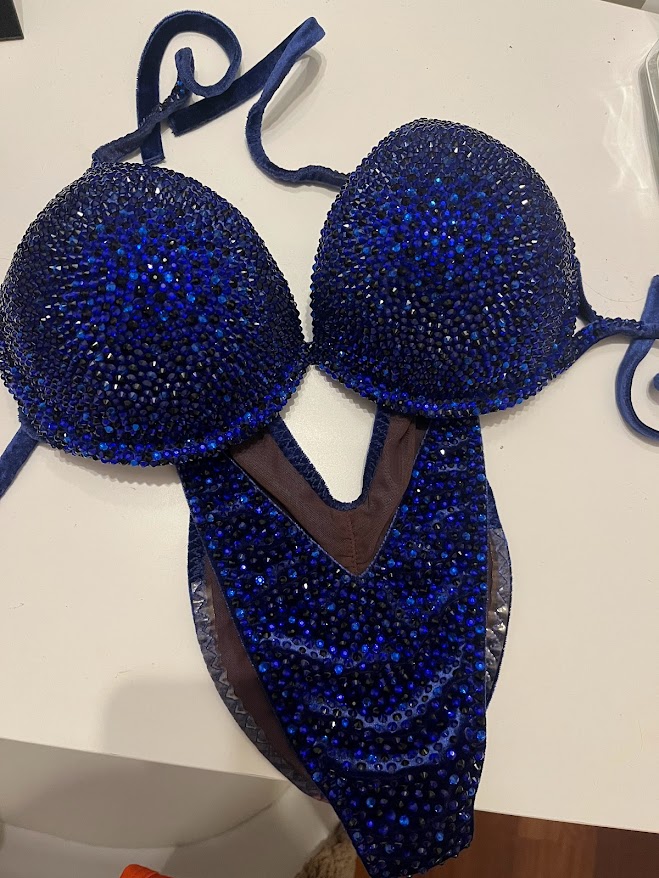
Most of the negatives are health-related, but there is also a fairly high level of spending throughout the year, as we understood from previous interviews. It is not possible to practice the sport if you do not have enough money, as the training fees alone cost at least €150/month. The most expensive single purchase for myself at the moment is definitely the competition bikini, which cost €495. Below is also a picture of the bikinis in question.
A physiotherapist can help fitness athletes in the same way as athletes in other sports with potential sports injuries. Physiotherapists also have a role to play in the treatment of patients with eating disorders. The physiotherapist examines the functional capacity of patients with eating disorders. This includes testing joint mobility, strength and endurance, measuring weight, measuring heart rate and heart rate rise during exercise, and monitoring gait, balance and body control (Eating disorders: Current treatment recommendation 2014). The physiotherapist can do a range of exercises to focus on the body in a positive way and try to block out any negative thoughts. Mindfulness training is one way to help the patient. (Kumlin & Väntti, 2015, p. 17) However, a physiotherapist is not the first health professional to go to when suffering from an eating disorder. Rather, a physiotherapist is a good help at the stage when the illness is already on the mend.
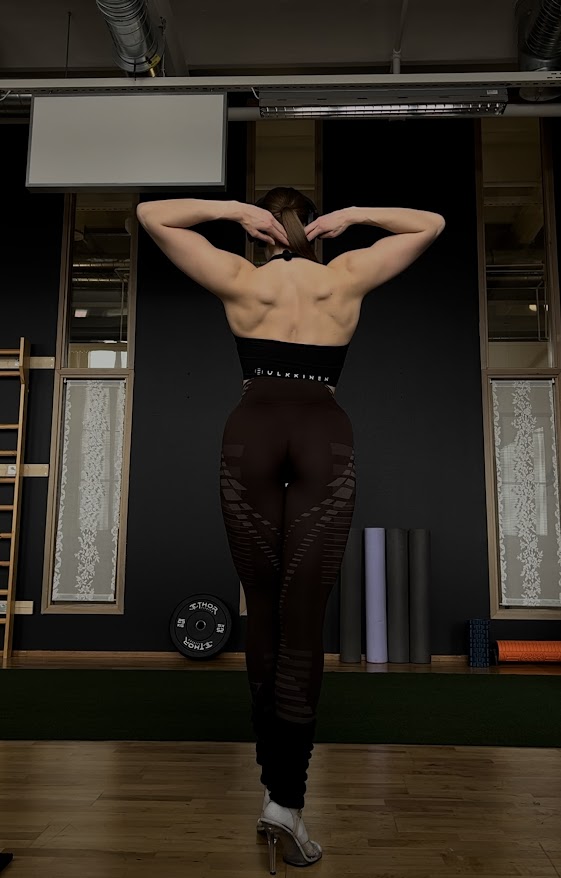
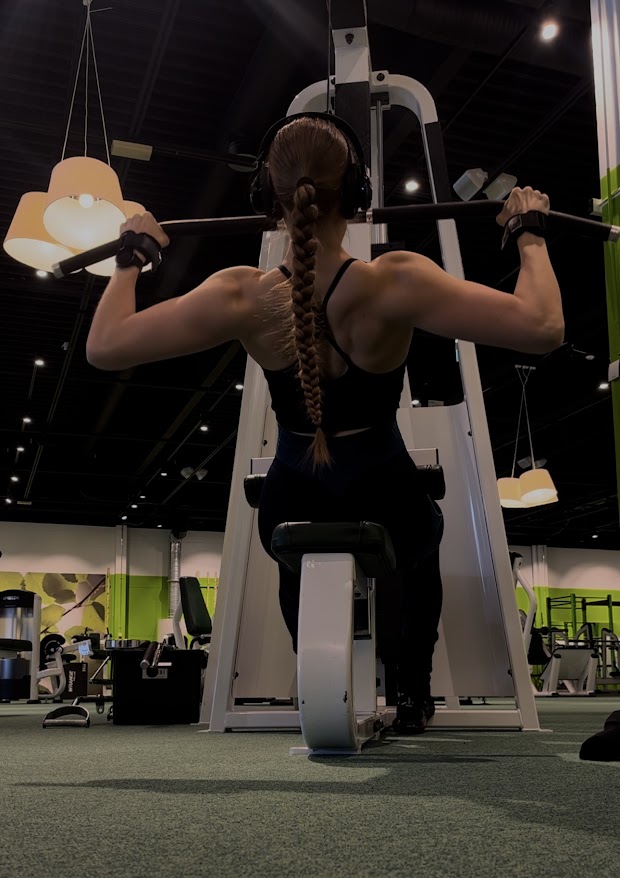
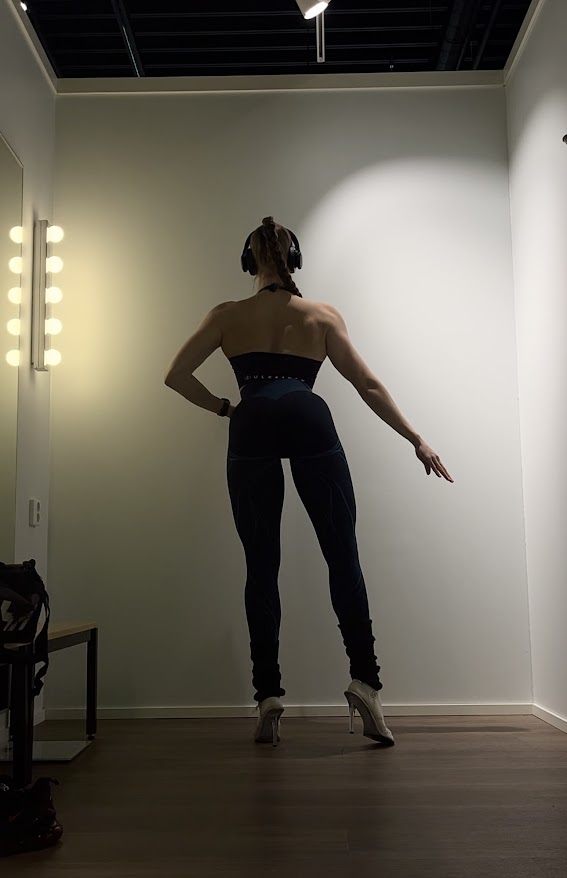
This was the last post in our blog series, we hope you enjoyed reading it and now understand more about fitness as a sport. Finally, a few more pictures of me before the fitness starts to change towards competition condition.
Ideation, writing and planning: Sarianna Virtanen, Suvi Rantala & Heini Lehtiranta
Part of the subject: Sarianna Virtanen
Sources
Hulmi, J., Isola, V., Suonpää, M., Järvinen, N., Kokkonen, M., Wennerström, A., Nyman, K., Perola, M., Ahtiainen, J. & Häkkinen, K. (2016). The effects of intensive weight reduction on body composition and serum hormones in female fitness competitors. Pubmed. https://pubmed.ncbi.nlm.nih.gov/28119632/
Juntunen, T. (2019). Bikini Fitness-urheilijoiden syömiskäyttäytyminen. [Pro gradu- työ, Itä- Suomen yliopisto]. UEF//EREPOSITORY http://urn.fi/urn:nbn:fi:uef-20190576
Kumlin, E. & Väntti, J. (2015). Rentoutustuntien kehittäminen HUS:n syömishäiriöklinikalla. [AMK-opinnäytetyö, Metropolia Ammattikorkeakoulu]. Theseus. https://urn.fi/URN:NBN:fi:amk-2015120218899
Syömishäiriöt: Käypä hoito – suositus. (2014). Suomalaisen Lääkäriseuran Duodecimin, Suomen Lastenpsykiatriyhdistyksen ja Suomen Psykiatriyhdistys ry:n asettama työryhmä. Suomalainen Lääkäriseura Duodecim. https://www.kaypahoito.fi/hoi50101?tab=suositus
Writer: Nursing student Madina Haidari
There is no such word in the world to describe the precious position and worth of a mother, but they are the living angels bring so much brightness and blessings our life by their presence.
Today, as we celebrate Mother’s Day, it’s an opportunity to reflect on the unparalleled role that mothers play in our lives. Their unwavering love, boundless support, and profound belief in us shape our very existence. Even when separated by distance, the warmth of a mother’s love transcends physical boundaries, residing deep within our hearts.
The immeasurable value of a mother’s presence cannot be overstated. They are the architects of our happiness, the pillars of strength during challenging times, and the guiding lights illuminating our path forward. Their nurturing essence enriches every aspect of our being, infusing our lives with boundless love and endless blessings.
On this day, and every day, let us honor and cherish the remarkable persons who fulfill the role of motherhood with grace and dedication. Their selflessness, resilience, and unwavering devotion epitomize the true essence of maternal love. May we express our gratitude not only through words but also through actions that reflect the depth of our appreciation.
To all the incredible mothers out there, thank you for being the epitome of love, resilience, and compassion. Your presence in our lives is a priceless gift that we treasure each day. Happy Mother’s Day!
Writer: Nursing student Yang Hu
International Nurse’s Day is celebrated on the 12th of May since 1965. This day commemorates the contribution of nurses to the public.
The Finnish Nurses’ Association is a member association of the international organization of nurses called the International Council of Nurses (ICN). It celebrates the day this year with a campaign thanking nurses for their valuable work for health and well-being.
Nurses play a crucial role in transferring health care in a broad perspective by providing comprehensive care to individuals of all ages and backgrounds. Their expertise in various areas, such as preventive care, chronic disease management, and patient education, allows them to address a wide range of health concerns and promote overall well-being.
By enhancing workforce productivity, nurses not only deliver efficient and effective care but also contribute to the overall success of health care systems. Through their dedication and expertise, nurses help streamline processes, improve patient outcomes, and reduce healthcare costs.
Nurses also strengthen health care systems by advocating for improvements in policies, regulations, and resources. Their unique perspective as frontline providers enable them to identify areas for enhancement and drive positive change within the healthcare industry.
Moreover, nurses support the alleviation of poverty by providing access to quality healthcare services to underserved populations. Through their commitment to addressing health disparities and promoting equity, nurses play a critical role in improving health outcomes for vulnerable communities.
Additionally, nurses play a crucial role in addressing gender equality within the healthcare workforce and ensuring that women have equal opportunities for professional advancement and leadership roles. By advocating for gender diversity and inclusivity, nurses help create a more equitable and inclusive healthcare environment.
Furthermore, nurses ensure the preparedness and effective response to public health emergencies by providing essential care and support during times of crisis. Their expertise in emergency management, disaster response, and infection control is vital in safeguarding public health and mitigating the impact of emergencies on communities.
Thanks for all nurses!
Reference and further information: https://www.icn.ch/news/international-nurses-day-2024-theme-announced-our-nurses-our-future-economic-power-care
Fitness athletes’ own experiences
Below you can see our second interviewee’s own experiences and thoughts on the sport.
Saara, 23 yrs., Team Step2Fit, Bodyfitness
Second we interviewed Saara. She is 23 years old and represents the Team Step2Fit team. Her sport is Bodyfitness (Body fitness is a sport that aims to build more muscle mass than bikini fitness). Before fitness, Saara has played ringette for 11 years from F-juniors up to SM level. In addition, she also played a few years of ice hockey. She has started fitness training in January 2022, but has been going to the gym since 2017.
“I got into fitness myself through the gym and following people competing in the sport on social media. In addition, two other competitors came to our gym, so it was through them that I got interested in the sport. Of course, at this point I had been going to the gym for 4-5 years.”
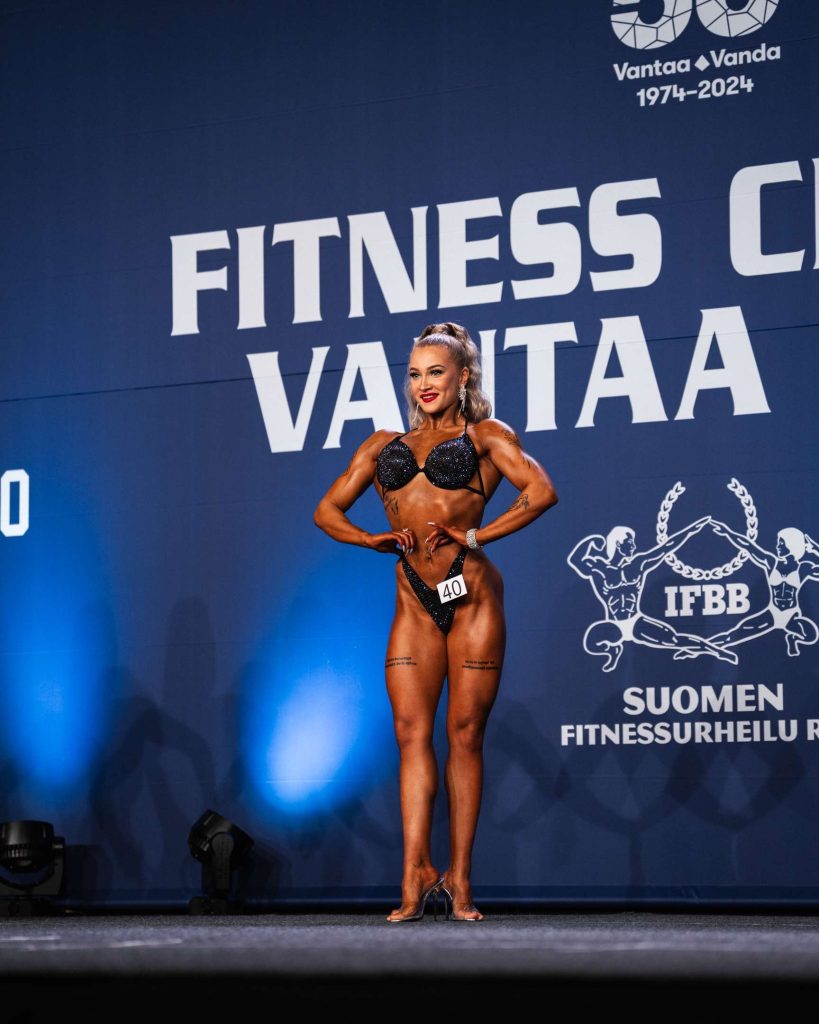
Saara has now started her off-season after a long, 1.5-year competition prep. Saara has competed for three seasons in a row, starting in November 2022 and continuing through many surprises until April 2024. In between the preps, however, there have been a few free eating periods, usually lasting 3-6 weeks. Currently, her workouts consist of 4 gym workouts with a few aerobic workouts around them. The gym workouts are split into 1 leg workout and the remaining 3 workouts are for the upper body.
“I have 6 competitions behind me, one of which is the World Championships! As an experience, the first competitions were just a touch and a look at the sport, no expectations and no knowledge of what the stage experience would be like. The second and third competitions were exciting in a different way, as the sport changed from wellness fitness to body fitness. The World Championships, on the other hand, were a completely different kind of excitement when it came to the International Championships. But as an experience, the World Championships were really great and unforgettable.”
Saara says that the last season and its competitions were the hardest for her, at least mentally. “A competition prep that goes on this long is really hard on the body, but also on the mind. Still, I don’t regret for a moment that we continued this long. It’s a time when you get to know yourself and your body super well, which is really important for your future.”
However, she says that the experience of the competitons itself has generally been positive every time.
“I enjoy being on stage, but the bigger thing for me is the journey to get there. It’s really important and motivating for me to beat myself and challenge myself every day. However, the hard weight training and improving is the most important thing for me. I don’t do fitness because I want to be judged on stage, but I do it because I love going to the gym and challenging myself every day, and competing is cherry on the top! And that should be every fitness athlete’s motivation to do this sport.”
Fitness as a hobby takes a lot of money, and Saara has not wanted to calculate her own income on an annual basis, but gave examples of how much money can possibly go to certain things. However, she says that you can influence how much money you spend.
“I’ve always tried to go with the cheapest. You can’t really influence the coaching fees themselves, because you don’t choose a coach based on price and it’s worth investing in. My coaching fees have been between 180-250€/month, when I have been with two different coaches. I have always bought used competition outfits, they cost 200-450€/each. Competition shoes were 90€, which of course I bought new! I probably could have got them cheaper second-hand. The gym card is 50 €/month and the food costs probably 200-300 €/month, but I would still buy these even if I wasn’t competing. I might even spend a bit more on food. The competitor’s licence is €250 per year and the competition fees are currently €100-150 per competition. I often do all the make-up and hair for competitions myself, but these can easily cost hundreds per competition. Competition colouring as a service is €130 per competition, but if you do it yourself, the price is around €50, because there are enough of the same colours for many competitions.”
“Accommodation and transport costs are all about where you live and whether you choose an Airbnb or a hotel! Personally, I prefer Airbnb apartments for competition trips because they feel more like a home and always have a kitchen and a bit of peace and quiet! They are also cheaper. If you decide to go to the international championships, all flights/boats are expensive. You don’t have to take pictures of the competitions, but I’ve spent 50-130€/competition on these. Of course, there are all the “hidden costs” of buying candy, wine, plastic wrap (to protect the toilet bowl for the competition colour), etc., whatever you need if you can’t find it at home.”
Prior to entering competition coaching, Saara had been going to the gym for about 5 years. The plans for the competition were finalized almost as soon as the training started. The off-season lasted for about nine months before the first competition prep.
“There are always some minor illnesses at prep, but otherwise everything went well, except for the last prep. Three months before the competition I tore ligaments in my ankle and I went two months without training my legs properly and one month without doing any cardio or jogging. Posing was very difficult with one heel and a broken leg, but somehow I still managed to do it. At the beginning of the last prep there was a divorce and a move, which was a bit of a mental wobble, but in the end, despite these adversities, the prep went really well.”
Saara says that as a competitive athlete, you have to think about every choice you make in order to support your own fitness. Everything has an impact on how you manage your everyday life. Eating, sleeping, training, aerobic exercises and posing must be able to fit into your everyday life so that you can cope. As a competitive athlete, other “extras” such as a social life often have to take a back seat, which is a shame, but as a competitive athlete there is little “free time”.
“Depending on the coach, you can influence the form of training. With a coach it is possible to make a training programme that suits you. But you have to remember that if you want to improve, you have to go outside your comfort zone and do things that are not necessarily the most fun.”
Saara says that her absolute favourite food on the diet is chicken, rice and broccoli. In the mornings and evenings she likes to eat porridge. In the off-season, she would not eat these foods as reduced as she does on the diet. On the competition diet, everyone also has a special “treat” that they like to eat, which may not necessarily work as a treat during the off-season.
“On my last prep my delicacy was pickles and tomatoes, the one before that was sauerkraut and beetroot. I’ll admit to myself that kind of indulgence in prep, but these all go with the macros! So if I want treats, then I have to pinch off the food that goes into the macros of those treats. Otherwise, when you are hungry you wouldn’t even want to trade, for example, 40 grams of porridge to one ice cream! The first day after the competition, we went to the restaurant to eat just basic Mexican food, which is a prep end tradition for me. But the first thing I put in my mouth right after the stage is water and a banana.”
There are downsides to fitness, but there are always downsides in sports, especially if you’re competing at the top. Saara says that the potential risks of fitness include eating disorders, body image changes, self-esteem issues, endocrine and recovery-related health risks.
“This is a judged sport, where your body is judged and compared to others. If the competition doesn’t go the way you wanted or expected it to, it can feel really, really bad and then you start going through all the thoughts about how you’re worse than someone else. Especially people who are as self-critical as I am, so it really hits you in a different way. But all these bad aspects are worth discussing with the coach.”
Apart from the injury mentioned earlier, Saara has always done well without any major setbacks. At the moment, her goal is to develop as much as she can, get some hard and developmental training under her belt and, above all, enjoy the off-season. “The next competitions are already set, so let’s go towards them!”
Alongside fitness, Saara works as a security guard and her shifts are usually 12 hours. She says that fitness as a sport is sometimes difficult to fit in alongside such shifts. She also says that on her days off, she can usually manage to work out, but her working days are often so demanding that it’s hard to go out and work out.
“Especially if you have long working hours and only sleep at home between days, it takes a bit more recovery afterwards, and the workouts aren’t always the best. Not to mention our night shifts, which probably don’t even need to be mentioned.”
Thanks to Saara and Riia for participating in the interview!
Ideation, writing and planning: Sarianna Virtanen, Suvi Rantala & Heini Lehtiranta
Fitness athletes’ own experiences
We interviewed fitness athletes who have already competed. We asked them a few questions and also asked them to tell us about their sport in their own words. Below are our first interviewee’s own experiences and thoughts on the sport.
Riia, 20 years old, Team Piukat Paikat, Bikini Fitness
Our second interviewee is Riia. She is 20 years old and represents Team Piukat Paikat and her sport is Bikini Fitness. She has three more years to compete in the junior category (20-23 year olds) and in addition to that she competes in the open category, which has competitors of all ages. Riia has her first season of competition behind her and competed in autumn 2023. She finished sixth twice, reaching the finals and a podium finish. In the international race, she finished seventh. In addition to fitness, she is studying to be a physiotherapist in her first year and her previous education is as a practical nurse, so she is well versed in health issues. Physiotherapy as a profession is very close to sport and wellbeing. With this in mind, she finds that both professions are a plus for fitness.
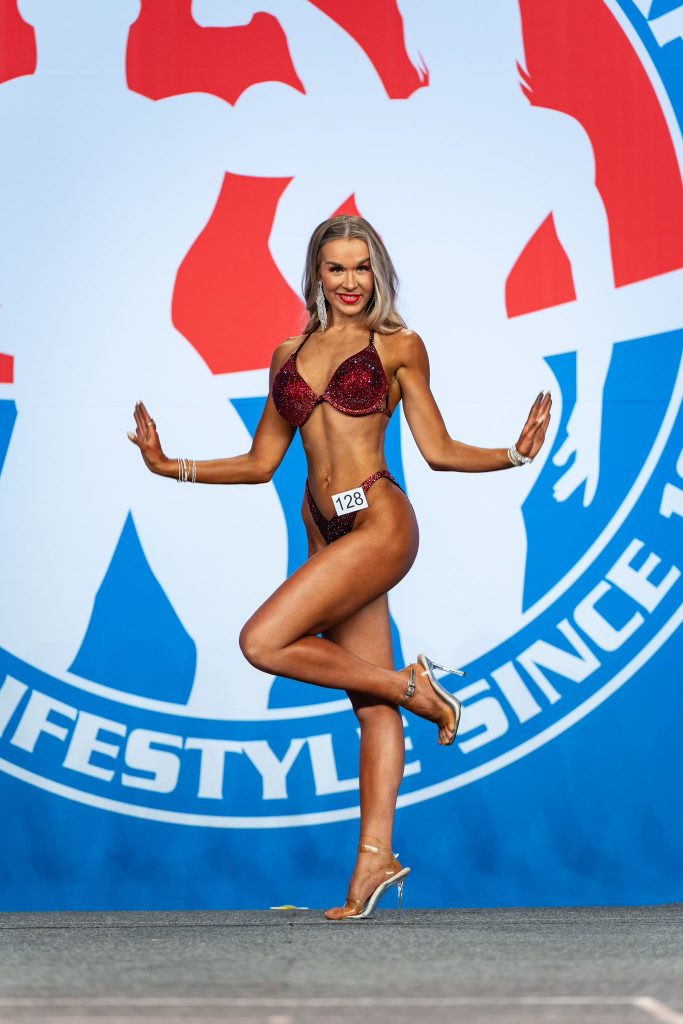
Riia says that she got into the sport through gym training. “I have always been very self-critical and determined. I wasn’t happy with myself at all and started going to the gym. As I trained more and more, I realized that I really like what I do. I wanted to take my training to a new level and started looking on the internet for possible sports. I quickly found fitness and realized that I definitely wanted to try it. My friends have never really been interested in the sport, but that didn’t slow me down. Before taking up this sport, I was into dancing and horse riding.”
Riia has been in competition coaching for four years and even before she started training for competitions she had been going to the gym for a few years. When she started fitness she was very young, only 17 years old and still has a great passion for the sport. She currently has gym sessions 4-5 times a week, bodywork three times a week, posing two times a week and aerobic training 2-3 times a week. She says that the workouts are planned to include rest days to allow for recovery, which is an important part of the overall plan.
Riia is feeling good about her first season and wants to improve even more and return to the competition stage better than before. Her goal is to compete in the spring of 2025, so her new diet would start this autumn 2024. “I am happy with the past season, of course there is always room for improvement. I want to improve, gain muscle and be a better version of myself next season! It was a great experience and taught me a lot about myself, but after the season I felt a certain emptiness. A feeling of emptiness about what I’m doing now that I’m not preparing for the competition. It took a few weeks to unravel that feeling of emptiness and the whole process. It took longer to recover, but it started to go in the right direction under its own steam.”
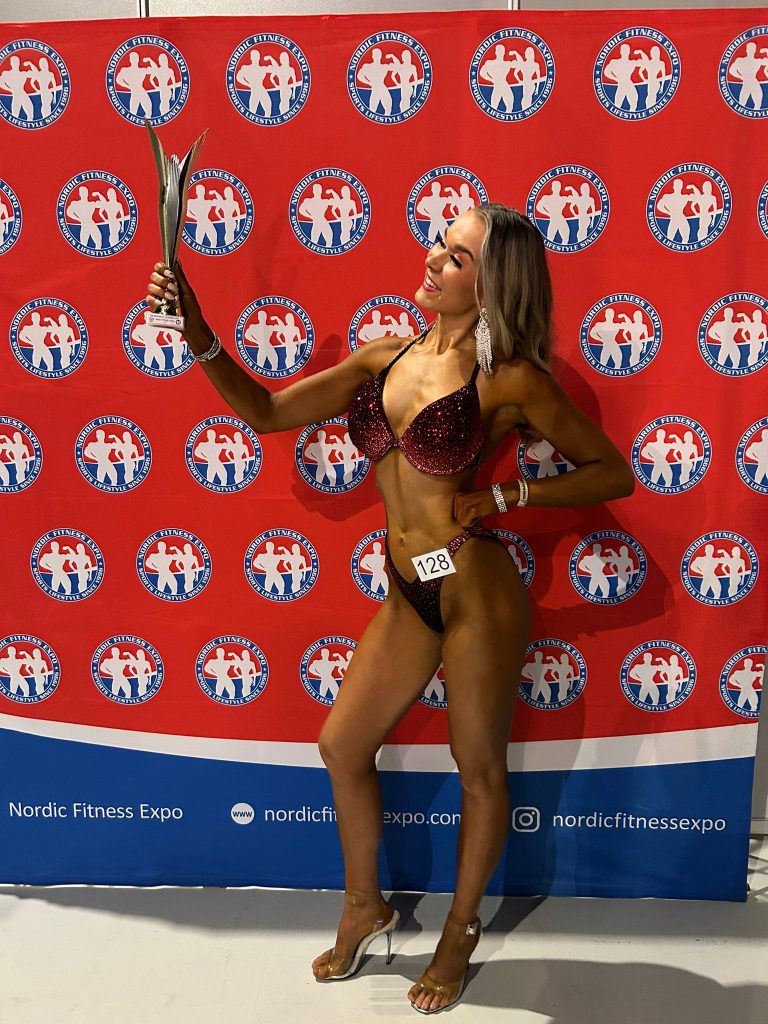
Riia tells us that she spends a surprising amount of money on fitness, so it’s a good idea to save for it. She says that the bikini was her most expensive purchase, costing €550. Other purchases such as competitions jewellery cost €50-60 and for example competition dye was €150, competiton licence €250, competiton fee €100 and competiton shoes €70.
“In addition, you can count hairdressing, doing the nails, sugaring and other beauty treatments. The competitions were held in different locations, so several hundred euros were spent on accommodation. About €90 was spent on the make-up needed.”
Before deciding on her first competition plans, Riia had been in the competition coaching for a year and a half. The coach wanted to get to know her properly and to gain more muscle mass before the diet.
“This made sense because I was very young (17 years old) when I started coaching. At that age, my mind might not have been able to cope with all the aspects of competing. Moreover, it is a judging sport that requires a certain amount of guts. “
Riia did well on the prepp and found it reasonably easy. She would have expected the prepp to be tougher and more difficult.
“My body worked well and everything went very smoothly from start to finish. There were some bad days, but overall everything went well, fitness improved, I ate well until the end and my mood was steady. My diet lasted a total of seven months.”
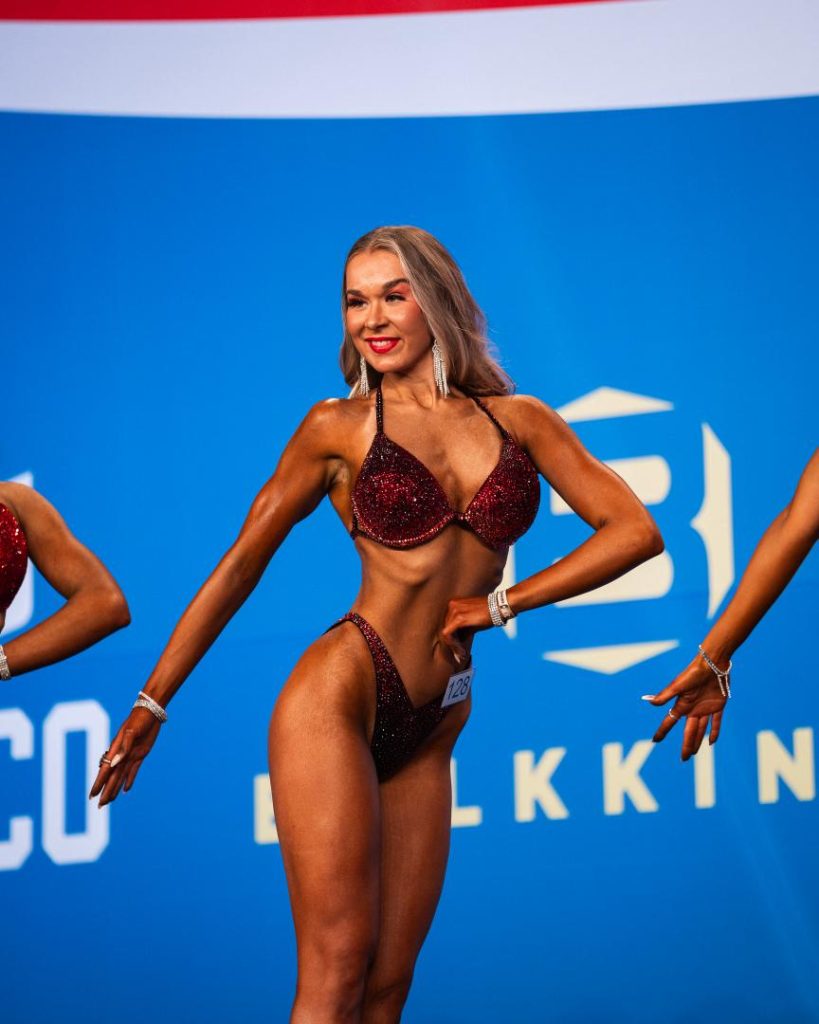
Fitness also takes up a lot of time from everyday life in Riia and is therefore comparable to a lifestyle. It’s about daily choices and planning your schedule. Riia says that you have to train for the love of the sport. She also has the opportunity to influence the content of the training programmes, as they are made for the athlete. The coach often asks her what she likes and what she doesn’t like, which is the starting point for planning training programmes.
“The freedom of the sport to do the training when there is time in the day and to adapt it to your own week is possible.”
Riia says that on the prep, her favourite foods were definitely minced meat, macaroni, sugar-free ketchup and fresh salad. On refeed days, she had the freedom to eat whatever she wanted, so there was also the opportunity to eat some sweets. However, on refeed days, she did not like to buy chocolate or sweets from the shop, for example.
“I liked pastries and home-made food with cream. On the prep, I ate a few sweets with home-made food on the day of refeed. The first thing I ate after the competition was carrot cake! The best treat ever.”
The downside, in Riia’s view, is the constant comparison with others, which can lead to excessive self-criticism. “You need to be aware of body image changes and have good control over your mind when taking up the sport.” However, she feels that the sport definitely gives more than it takes!
Riia wants to emphasize the importance of a good coach. “Your coach should be someone you can trust completely and you can tell her everything.” The coach plays a big role in fitness and should have the professional skills and training to coach.
“My coach is my superhero, without her I wouldn’t be able to do this!”
In addition to succeeding in fitness, Riia’s future dreams include having her own dachshund and a detached house. Of course, the dream is also to stay healthy and feel well.
We will also be publishing our second interviewee’s own experiences and thoughts on the sport, so stay tuned!
Ideation, writing and planning: Sarianna Virtanen, Suvi Rantala & Heini Lehtiranta
Towards to the competition stages
I started exercising regularly in August 2021. Then I was doing regular gym workouts without a coach. At that time, my training lacked a sense of purpose and progression, meaning that my development was not optimal or as fast as it could be. Initially, I was training in the gym about 3-5 times a week. Afterwards, my workouts were quite one-sided and there should have been more variety in repetitions, sets and movements. Diet also played far too small a role. I ate too little, as I didn’t understand at all how much I should have eaten in order to improve.
Over time, I began to learn and understand more. I joined fitness in October 2023, so I’m still very much in the early stages of the sport. However, I have been interested in fitness for several years now. As my training progressed, I wanted to find a coach who I could learn more from and who could help me monitor my progress. Because I knew that without a coach, the results could be disastrous at worst, given my lack of previous experience in the sport. In the end, I found my coach half by accident. I went for an Inbody measurement in October 2023. At that time, the measurement officer, my current coach, and I started talking about fitness. Within a week the contract was signed. The plans for the future were made very quickly, as we decided right from the start that I would be competing in the autumn of 2024. This is the last year that I will compete in the junior series, which was also one of the reasons for the fast start. Stage performance plays a big role in Fitness also and I already enjoy performing in gymnastics, so fitness seemed like the right choice for me.
My coach made me a frame for my diet and a set training programme, which I have now been following for more than six months. I trained 4 times a week in the off-season. Now I work out 4 times a week in the gym and twice a week doing aerobic activities such as walking and cycling. Running is not my thing. Towards the end of the season, the aerobic exercise numbers increase somewhat.
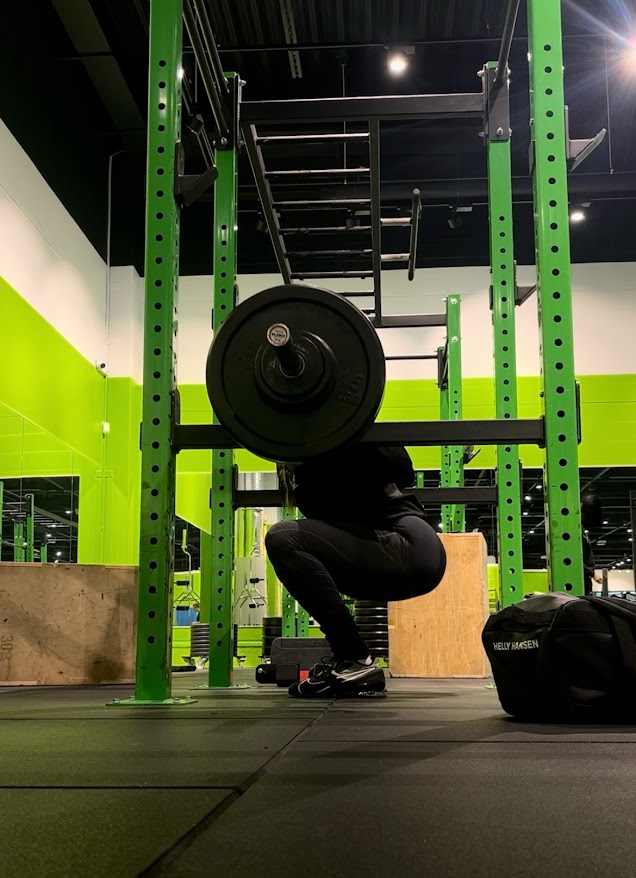
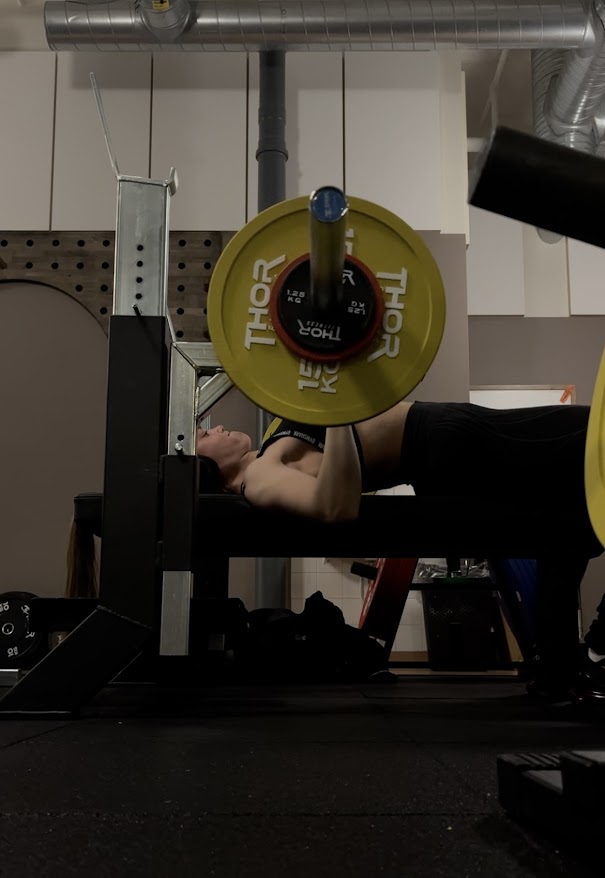
In addition to training, there are many essential aspects of fitness. You need to get enough sleep and rest, and your diet needs to be diverse and healthy. And at regular intervals, you need to take a week off from training. Possibly, and hopefully at least during Midsummer, I will be able to refuel, i.e. eat more and eat more freely. At the beginning, it’s impossible to know everything for sure, but as the diet progresses, we’ll know better how my progress is going. The most important thing about the diet is that you get the right amount of all the essential nutrients, rather than what foods you eat exactly. Of course, you shouldn’t compromise the purity of your food.
Now, in preparation for competitions, I record my weight and sleep daily for my coach to see. I try to get at least eight hours of sleep a night. On top of this, once a week I measure my waist, thigh and arm circumferences for my coach. Inbody measurements are something I did at least in the beginning of the diet and are part of the end of the diet. These also allow me to monitor my progress myself. Since appearance and eating play such a big role in fitness, you have to have a good relationship with your body image and food when you start the sport. In addition, your mind and life situation must be such that it does not negatively affect your diet progress, for example.
Studying physiotherapy is very useful in my sport, as I have a better understanding of how the body works and the effects of diet and physical activity. Not everything has been completely new to me, my coach complements my own knowledge. My knowledge of human anatomy also helps me to understand the effects of training on my body. The studies also help me to better understand the different risks involved, for example in gym training and overall health. In addition, I found courses such as load physiology and health measurement more interesting than some of my fellow students, as the topics are close to my interests and my own sport.
Ideation and planning: Sarianna Virtanen, Suvi Rantala & Heini Lehtiranta
Interview: Heini Lehtiranta & Suvi Rantala
Subject matter: Sarianna Virtanen
Writing: Heini Lehtiranta
From gymnast to fitness athlete
I’m Sarianna Virtanen, 23-years-old young woman. At the moment I live in Pori, but I come from a small village in Kanta-Häme. I am studying physioterapy for the second year at Satakunta University of Applied Sciences in Pori. Right now, I’m doing a practice at the Soteekki service centre for a total of seven weeks.
When I was younger, I practiced aesthetic group gymnastics for a total of 14 years, both at the Finnish championship level and the competitive level in Forssan voimistelijat and Turun Pyrkivä. From a young age, sport has been a great passion of mine and this is reflected in my hobbies, my choice of studies and in my future job dreams.
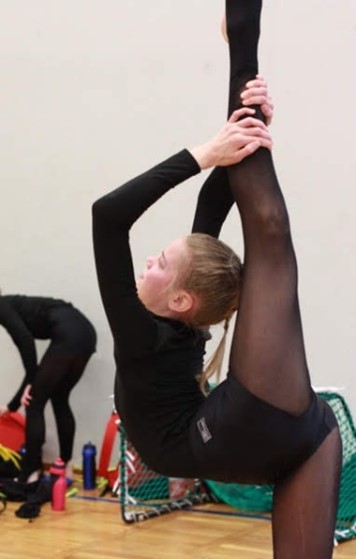
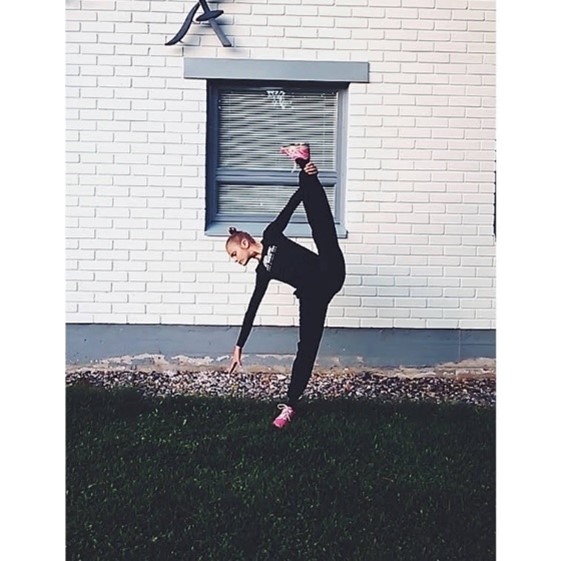
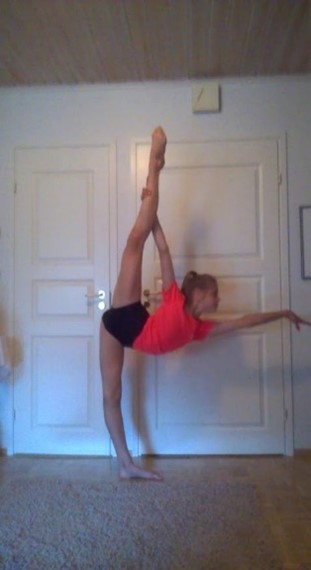
After I stopped competing in gymnastics in spring 2017, I continued my hobby with my team for my own pleasure in a more relaxed way. Due to the low number of team gymnasts, it was no longer possible to keep the team together. After gymnastics, I continued my sport by doing home workouts and going to the gym. And that’s how it happened, I fell in love with gym training. After a couple of years of regular training I wanted to have a goal for my training and my dream was to one day combine gym training and competition. So nowadays my sport has changed from gymnastics to fitness. Currently training towards the bikini fitness Finnish championships. Now I will see what fitness can offer me and whether I can succeed and achieve my dreams in the sport. Or will my sport change in the future?
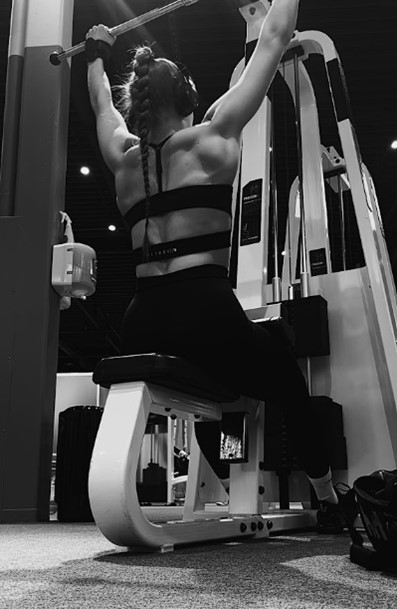
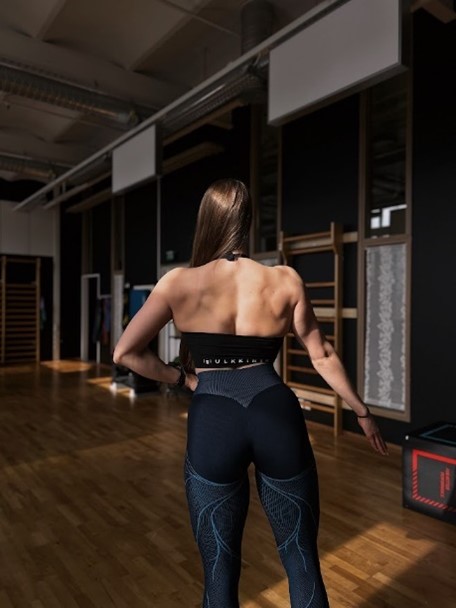
My interest in physiotherapy is born out of my background in competitive sports. The coach of my gymnastics team was a physiotherapist by profession and through her I have gained a good understanding of physiotherapy as a profession. I am also interested in working with people and helping them in a variety of ways. I would like to specialise in sports in the future and work with top gymnasts, for example.
I applied to study physiotherapy twice and the third time I got into school through an open route. I would like to do my part to raise awareness of the pathway to school. SAMK treats open pathway students in the same way as degree students. Only the support provided by KELA distinguished me from degree students, although there may of course be differences between schools.
Fun fact: My first competition prep started last Monday!
This is the start of a small blog series written by three physiotherapy students. The topics of the blog series revolve around fitness, gym training and studying physiotherapy.
Ideation and planning: Sarianna Virtanen, Suvi Rantala ja Heini Lehtiranta
Interview: Heini Lehtiranta ja Suvi Rantala
Subject matter: Sarianna Virtanen
Writing: Heini Lehtiranta
In this blog, we’ll dive into education and the career opportunities of a physiotherapists that open up after graduation.
A physiotherapist is a professional who promotes people’s functional capacity, health, well-being, and mobility. Physiotherapist expertise is particularly needed when aging, disability, pain, illness, functional impairment, or when factors in an individual’s daily life limit their functional capacity (Opintopolku.fi). Physical therapist is a legally protected professional title, which means that only individuals who have completed the required education have the right to work as licensed physical therapists and practice the profession. The activities are supervised by the Regional State Administrative Agencies (AVI) and the National Supervisory Authority for Welfare and Health (VALVIRA).
A physical therapist holds a bachelor’s degree from a university of applied sciences, and the studies last for 3.5 years, totaling 210 ECTS credits. In Finland, physical therapy can be studied at 17 different schools, one of them offers studies in Swedish, and the only English-language program in the Nordic countries is offered at SAMK. In addition to international degree, SAMK is the only university of applied sciences in Finland offering education in animal physiotherapy.
Typically, during the first year of studies, students familiarize themselves with basic knowledge such as fundamentals of anatomy, community engagement, client-centered communication, principles of guidance, functional capacity and its assessment, accessibility, biomechanics, motor learning, and therapeutic training. At Satakunta University of Applied Sciences, there is no internships during the first year, allowing time to dive into these basics. When students’ progress in their studies, their theoretical knowledge of physical therapy deepens. In the final year, the focus is on research, development, and innovation skills. In summary, the entire physical therapist degree consists of basic studies, professional studies, internships, and a thesis.
A physiotherapist can work in various places such as hospitals, health centers, private physiotherapy clinics, sports clubs, etc. The career opportunities for physiotherapists are diverse and vary depending on individual interests, specialization, and work experience. Here are a few examples of demanding career opportunities for specialization:
Working as a physio does not necessarily require specialized training, so after graduation, one can work in “basic-level positions” such as in nursing homes, with assistive devices, and in hospital/health center wards, where physiotherapists are responsible for health and functional capacity promotion and maintenance guidance, various therapeutic exercises, and manual therapy.
Currently, I am a second-year physiotherapy student in the international program. I have enjoyed my studies a lot, and this career feels right for me. Before starting my internship in Soteekki, I completed one internship in geriatrics, which I enjoyed a lot. During the internship, my feeling that I had chosen the right career strengthened. After graduation, my dream would be to specialize in OMT physiotherapy and/or maternity physiotherapy. There is such a big variety of specialization possibilities in physical therapy, and each one seems truly interesting. Therefore, it’s possible that my current dream about the future career path may change as my studies progress.
So, if rehabilitation and health promotion, as well as a people-centered field, interest you, physical therapy is a good career choice for that.
– Alexandra
My name is Megha Gurung. I am from Nepal. My native language is Nepali. I completed a diploma program in nursing in my own country. I spent 2.5 years working as a scrub nurse in a hospital after finishing my education. I’ve always desired to pursue my nursing bachelor’s degree overseas. I was advised to study in Finland by one of my friends. And I did some research on Finland’s educational system. Finland ranks as the happiest and safest country in the world, and it provides among the best educational systems, according to my research. I chose to continue my education in Finland. I applied to Satakunta University of Applied Science, and fortunately, SAMK extended an offer to me.
In March 2022, I traveled to Finland. Starting the course was difficult at first since I was unfamiliar with Moodle. It takes a month to become adept at using Moodle. I noticed while studying that the educational system in this country differs from ours. In Finland, a course lasts for one semester, whereas in my home country, a course lasts for a full year. In my country, we take our exams on paper, but here, the exam is conducted on a computer. For a single course exam are taken three times here, but in my country, final exams are only taken once. I’ve previously studied nursing, so I can learn or get acquainted with the material easily. I have also done clinical practice in acute care hospitals and senior homes in Finland. While I’m practicing in Finland and working as a nurse in my home country, the day shift is six hours long and the night shift is twelve hours long. However, here, the day shift is eight hours long and the night shift is ten hours long. In my home country, the nurse-to-patient ratio is 2:20; a single nurse handles or is responsible for doing medication, dressing, admission, discharge, and medication ordering simultaneously. However, in Finland, a single nurse tends to at least 4 patients, with task distribution. A medication nurse looks after medicine, while a primary care nurse looks after basic patient care. While the workload is not as heavy as it would be in my native country. The rule about working that I liked the most was that there were two or three times breaks. It enables the employee to recover and rejuvenate so they can work without being fatigued. In my home country we receive monthly salary but here in Finland they are paid on an hourly basis.
For me, language is the only thing that is challenging. As far as I’m aware, finnish is one of the hardest languages in existence. I’ve been living in Finland for almost two years now. Speaking and understanding finnish continues to be difficult for me. As an international student with a background in nursing, I’m constantly looking for part-time work in home care. Sadly, work experience as a nurse is not valued here unless we understand the language. Working in hospital or elderly care center requires fluency in Finnish. I’m trying to learn Finnish, but it’s challenging. I am scheduled to graduate in a year. It occasionally worries me what would happen if my language skills do not match those of a finnish even after graduation.