
WHEN WORDS ARE NOT ENOUGH – MANY WAYS TO COMMUNICATE

By- Uthpala Weerawickrama Gunawardane

Communication is an essential part of social and healthcare work. We often think of communication as speaking and listening. However, it involves much more than words.

People communicate in many ways. We can use speech, facial expressions, gestures, body language, eye gaze, pictures, signs, sign language, writing, touch, technology, etc. Some people use several methods at the same time, while others may depend on particular way of communicating.

This is especially important in healthcare because successful communication is very important at every step of the care journey. Every client is different and unique. Some people may have difficulties with speaking, hearing, understanding language, or expressing their needs. They may have these difficulties because of physical or mental health conditions. This does not mean they have nothing to communicate.

Sometimes we just need to find another way to listen.
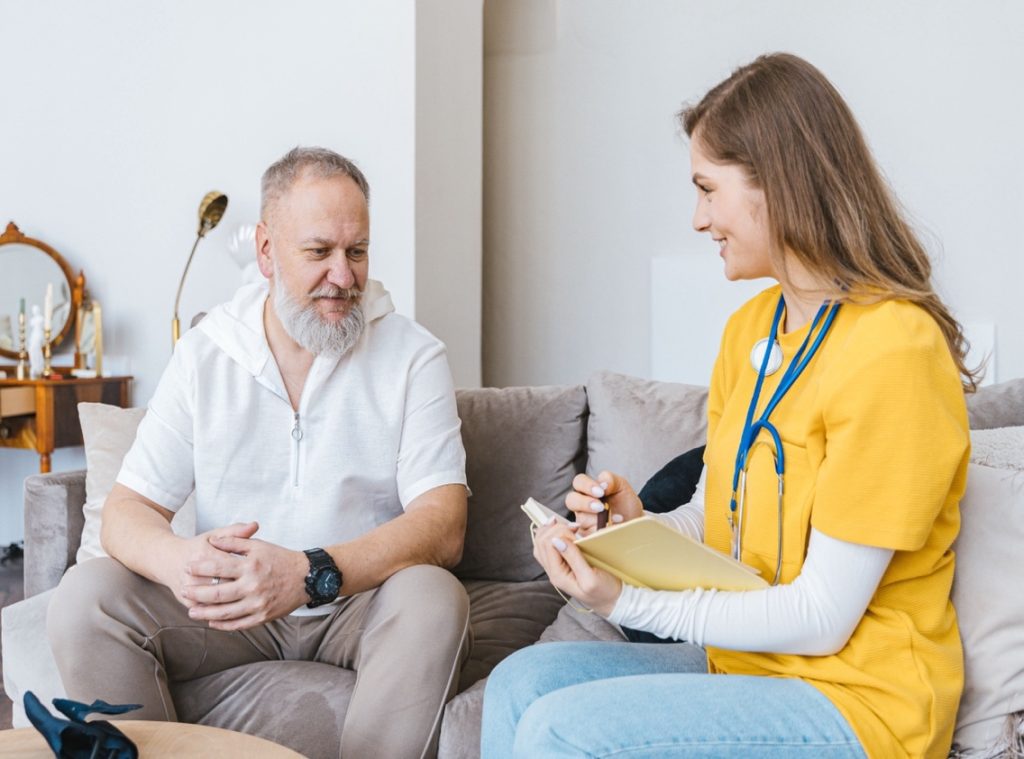
ILLUSTRATIVE PHOTOGRAPH. PHOTO SOURCE:PEXELS.

COMMUNICATION IS MORE THAN WORDS

Have you ever noticed that someone says they are fine, doing well, or that there is nothing to worry about, but their facial expression or behaviour tells us something different?

A person may say, “Fine,” but perhaps they are unusually quiet, look worried, or behave differently from usual.

Non-verbal communication includes facial expressions, eye gaze, gestures, body movements, and posture. These can give us useful information about what a person is communicating. However, we should be careful not to make assumptions. The same gesture can mean different things to different people.

Instead of deciding how a person feels, we can notice the change and ask respectfully.

For example we can ask, 

“I notice that you are quieter today. Would you like to tell me how you are feeling?”

The Finnish Memory Association (Muistiliitto) highlights the importance of non-verbal communication, including facial expressions, gestures, and touch, particularly when a person with a memory disorder has difficulties with speech or understanding language.

Observe, but do not assume. Ask and listen.

EVERYONE COMMUNICATES DIFFERENTLY

There is no single communication method that works for everyone.

Some people communicate mainly through speech. Others may use speech together with gestures, pictures, or signs. Some people may use AAC (Augmentative and Alternative Communication).

AAC can include pictures and symbols, communication boards, gestures and signs, writing, electronic communication devices, or eye gaze.

These methods can help a person express their needs, wishes, feelings, and choices.

For example, a client may find it difficult to answer the question, “What would you like to do today?” Instead of expecting a spoken answer, we could show pictures of different activities. The client can then point to or choose the activity they prefer. This gives the person another way to participate and make their own choices.

The UK organisation “Sense” describes communication as something that can involve many different methods, including speech, signing, gestures, pictures, objects, touch, and technology.

Communication should adapt to the person, not the person to the communication method.

PICTURES, SIGNS, AND SIGN LANGUAGE CAN MAKE COMMUNICATION EASIER

Pictures, symbols, and sign language can make communication easier, especially when communicating with words is difficult.

Pictures and symbols can help a person express what they want or do not want, which activities they prefer, how they feel, and what they need.

Simple signs or sign language can also support communication and help a person express themselves more clearly.

Visual communication can also make information easier to understand. For example, instead of explaining an activity verbally, we can use pictures to show the different steps. This can make situations clearer and support the client’s independence and participation.

The World Health Organization (WHO) emphasises accessible, person-centred communication that responds to people’s different needs.

The purpose of communication is not only to exchange information but also to give every person an opportunity to express themselves.

LISTENING IS ALSO COMMUNICATION

Good communication is not just about talking but it is also about listening.

In a busy healthcare environment, it can be easy to focus on completing tasks quickly. However, sometimes a client needs more time to find the right words, answer a question, or show what they mean.

We can support communication by:

  • giving the person enough time.
  • listening without interrupting.
  • using simple language.
  • asking one question at a time.
  • checking that we have understood correctly.
  • encouraging the person to ask questions.
  • using pictures or gestures when needed.

For example: “Could you tell me in your own words?” or “Did I understand correctly?”

These simple questions can help prevent misunderstandings.

The WHO recommends checking whether people have understood the information and being patient when communication takes more time.

SIMPLE LANGUAGE MATTERS

Healthcare professionals often use medical and professional terminology. These words may be familiar to us but difficult for clients to understand. When communicating with a client, we should always use simple and clear language instead of professional terms.

Instead of giving a long explanation, we can make communication easier by:

  • using familiar words.
  • explaining one thing at a time.
  • avoiding unnecessary medical terms.
  • using examples.
  • using pictures when helpful.
  • asking whether the client has understood.

WHO’s communication guidance recommends using plain language, familiar languages, and visual elements to make health information easier to understand.

Communication is successful not when we have explained something, but when the other person has understood it.

THE IMPORTANCE OF TOUCH

Touch can also be part of communication.A gentle and appropriate touch may communicate support, reassurance, or presence. 

The Finnish Memory Association (Muistiliitto) describes touch as one form of non-verbal communication and highlights its possibleimportance when communicating with people living with memory disorders.

However, touch is personal. People have different preferences, cultural backgrounds, and boundaries. Therefore, we should always consider the person’s comfort and wishes.

Good communication means respecting the person’s boundaries and adapting our actions to the individual.

COMMUNICATION AND PEOPLE WITH MEMORY DISORDERS

Communication can become more difficult for people living with memory disorders. A person may have difficulty finding words, understanding questions, or expressing what they want.

Communication does not have to stop in these situations. We can use familiar photographs, music, objects, gestures, facial expressions, simple questions, familiar routines, or appropriate touch. Familiar things can sometimes support communication and create meaningful moments. For example, a photograph of a familiar place may encourage memories and conversation.

The aim is not always to have a long conversation. Sometimes, a shared moment is enough.

COMMUNICATION AND INDEPENDENCE

Communication is closely connected to independence.

Imagine being unable to tell someone one of these things:

“I don’t want this.” or  “I want to go outside.” or “I’m in pain.”

Having a way to communicate these things is important for a person’s dignity and participation. This is why pictures, signs, writing, communication boards, and other AAC methods are not simply “extra tools.” For some people, they are essential ways of expressing themselves.

WHO’s disability-inclusive health guidance emphasises communicating directly with the person, asking how they prefer information to be presented, and recognising the person’s own knowledge about their needs.

The goal is not to speak for the client. The goal is to support the client in speaking for themselves, in whatever way works best for them.
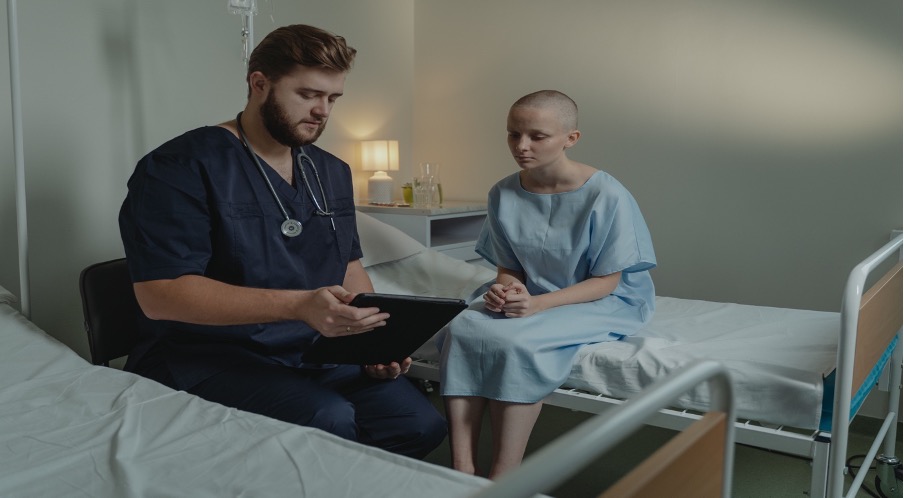
Illustrative photograph. Photo source: Pexels.

RESPECT, DIGNITY, AND AUTONOMY IN COMMUNICATION

One important lesson for healthcare students is that we should not make decisions for a client based only on our interpretation of their behaviour.

  • If a client is quiet, we should not automatically assume that they agree.
  • If a client moves slowly, we should not automatically assume that they are tired.
  • If a client does not answer immediately, we should give them time.
  • If we are unsure, we can ask questions or try another communication method.

The WHO recommends focusing on the person, communicating directly with them, and checking their understanding rather than making assumptions about their needs or abilities.

This is closely connected to respect, dignity, self-determination, and autonomy.

COMMUNICATION IN A MULTICULTURAL ENVIRONMENT

Soteekki is also a multicultural learning environment. Students, professionals, and clients may have different first languages and cultural backgrounds.

For international students, communicating in Finnish can sometimes feel challenging. You may know what you want to say but need more time to find the correct Finnish words. It is okay to ask for help.

Some useful phrases we can use are:

  • “Voisitko puhua vähän hitaammin?”
    Could you speak a little more slowly?
  • “Voisitko toistaa?”
    Could you repeat that?
  • “En ymmärtänyt. Voisitko selittää uudelleen?”
    I didn’t understand. Could you explain again?
  • “Ymmärsinkö oikein?”
    Did I understand correctly?

The WHO also emphasises using familiar languages and adapting communication to the needs of the intended audience.

Good communication does not require perfect language. It requires patience, respect, listening, and a willingness to understand each other.

FINAL THOUGHT

As future professionals in social and healthcare services, we should remember that communication is a shared process.We need to adapt our communication to the individual person and give them opportunities to express their own wishes, needs and feelings.

When words are not enough, communication does not end. We simply need to find another way to listen and give the person a chance to be heard.

References

  1. Avustajaklinikka. (2026, September 17). Miksi sanaton viestintä on ratkaisevaa avustustilanteissa? Avustajaklinikka.
  2. Communication Hub. (n.d.). Ways we communicate. Communication Hub.
  3. ECL. (2026, September 22). Beyond words: Why every way of communicating matters. https://www.ecl.org/media-area/blog/beyond-words-why-every-way-of-communicating-matters
  4. Muistiliitto. (n.d.). Kosketus ja sanaton viestintä. Muistiliitto.
  5. Sense. (n.d.). Ways of communicating. Sense.
  6. University of Mississippi Medical Center. (n.d.). Alternative means of communication. University of Mississippi Medical Center.
  7. World Health Organization. (n.d.). Module 4 Part 2: Strategies and good practices in disability-inclusive communication in health care. World Health Organization. https://iris.who.int/server/api/core/bitstreams/b90d6e84-171a-4ebf-aaae-77828c5d779a/content
How Does Welfare Technology Enhance The Well-Being of Adults

By Tharaka Palayangodage, Fernando Kumaragewattage & Kahalle Widanage Udeepa

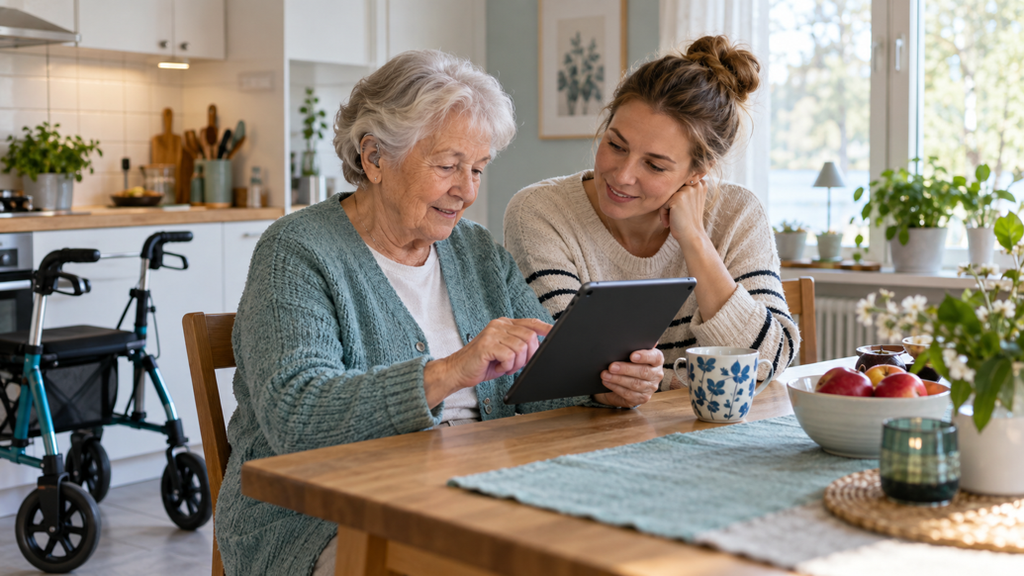
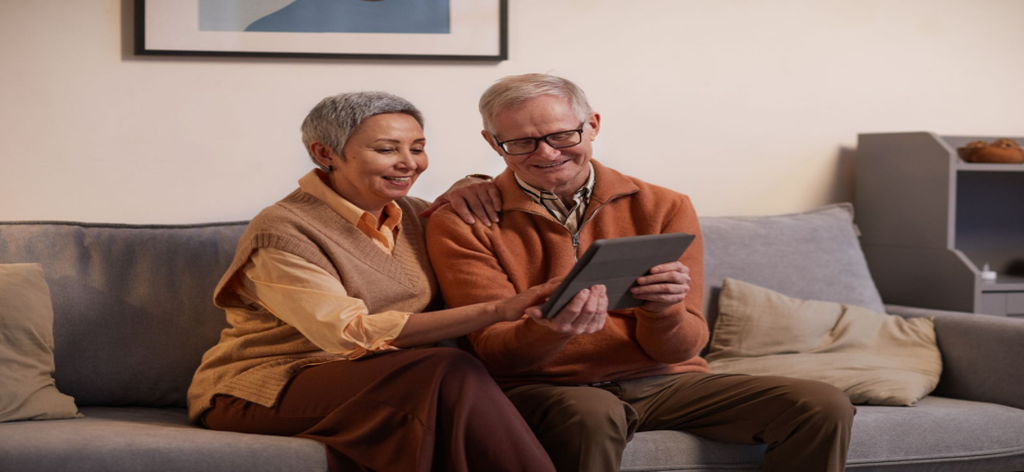
Figure 1. Older adults sharing a tablet. Photograph: Marcus Aurelius (2021), Pexels.

Introduction

Welfare technology can make ordinary activities easier, support safety and help people stay connected. It includes familiar products such as rollators and video calls as well as alarms, reminders and remote monitoring (Nordic Welfare Centre, n.d.). A useful device is not simply one that is available; it must match the person’s own goal, abilities and support network.

This blog has three parts. First, we explain everyday uses. Second, we examine safety, health and independence, including what research can and cannot prove. Third, we consider social well-being, digital skills, privacy and the importance of human contact.

The three topics

Part 1 – Welfare Technology in Everyday Life

Part 2 – Supporting Safety, Health and Independence

Part 3 – Social Well-Being, Challenges and Responsible Use

Part 1 – Welfare Technology in Everyday Life

By Tharaka palayangodage

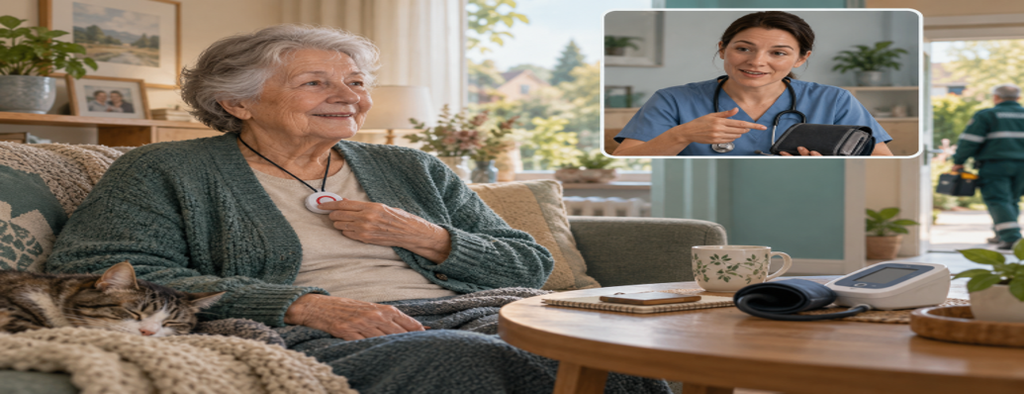
Figure 2. Everyday mobility and reminders. AI-generated editorial illustration; not a real person.

Welfare technology is technology used to maintain or improve security, activity, participation or independence for older people and people with disabilities (Nordic Welfare Centre, n.d.). It is broader than a single gadget: fitting, instruction and follow-up matter too. The World Health Organization (WHO, 2024) calls assistive technology an umbrella term covering products and the services around them.

Think of a person who wants to water plants, telephone a relative and remember an appointment. A rollator may support movement around the home; a video call can support contact; and a simple reminder can prompt a chosen routine. These are possible uses, not guaranteed outcomes for every person (Nordic Welfare Centre, n.d.).

Practical examples

• Mobility aid: a correctly selected rollator may help someone reach everyday activities.

• Reminder: a phone or clock prompt may support an agreed appointment or routine.

• Communication: video calls and accessibility settings may help a person keep in touch.

• Home controls: accessible lighting or door controls may make some actions easier.

The starting question is “What does this person want to do?” Their preferences, physical environment and ability to obtain help should guide the choice. WHO (2024) notes that costs, limited awareness and gaps in services can prevent access, even when suitable technology exists.

Part 2 – Supporting Safety, Health and Independence

By Fernando Kumaragewattage

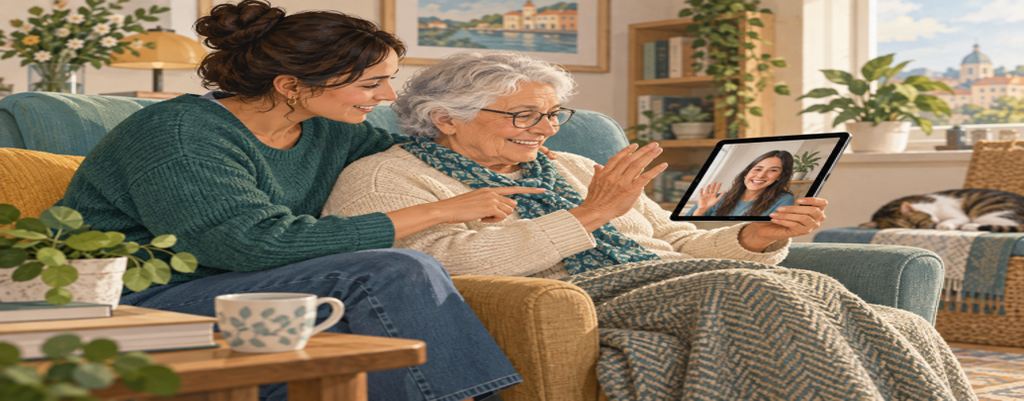
Figure 3. Alert, measurement and care response. AI-generated editorial illustration; the devices do not show clinical results.

Safety. A personal alarm or movement sensor can send a request for help. An alert is useful only if someone receives it and knows what to do; the response plan and a backup for device failure are just as important as the device itself (Nordic Welfare Centre, n.d.).

Health. Home measurements and medication support can help with an agreed care plan, but a reading or reminder should not be treated as a diagnosis or a substitute for professional assessment. In a Finnish assisted-living study, medicine-dispensing technology was associated with less time spent on medicine tasks, not with more measured direct care time; night monitoring was associated with more direct night care and fewer night staff (Väisänen et al., 2026).

Independence. Matching a mobility aid, accessible communication or a home control to a person’s goal may help preserve choice and daily function (WHO, 2024). Yet evidence does not show that every technology package automatically improves outcomes. In the ATTILA randomized trial of 495 people with dementia, a full assistive-technology and telecare package did not significantly prolong living at home compared with a basic package (Gathercole et al., 2021).

Read the findings carefully: the Finnish study was observational and did not directly test residents’ safety outcomes; ATTILA tested specific packages for people with dementia, not every device in every setting. Staff capacity, the person’s preferences and follow-up still matter (Gathercole et al., 2021; Väisänen et al., 2026).

Part 3 – Social Well-Being, Challenges and Responsible Use

By Kahalle Widanage Udeepa

Figure 4. Video contact with human support. AI-generated editorial illustration; not a photographed client.

A video call can offer a way to speak with a friend or family member when travel is difficult. But connection is more than access to a screen. WHO (2025) describes loneliness as the painful gap between desired and actual relationships; its report says the effect of digital technology on social connection is mixed and depends on how it is used. A device should add to meaningful contact, not displace visits or a person’s preferred activities.

Digital skills are an access issue. Small text, hearing or vision changes, confusing menus and lack of confidence can make a seemingly simple app difficult. We would begin with one action the person wants to learn, show it slowly, then ask them to try it. The teach-back or show-me approach checks whether our explanation was clear; it does not test the person (Agency for Healthcare Research and Quality, 2024).

Privacy matters especially when technology collects location, health information or images. Health information needs particular protection, and EU data-protection principles require personal data to be limited to what is necessary for its purpose (European Data Protection Board, n.d.). Before using a connected device, the care team should explain in plain language what it records, who can see it and what happens if it stops working. The person’s choice and the organisation’s rules must guide use.

For example, a person might prefer one weekly video call and a regular face-to-face activity, while declining a camera in their home. This is a suggested scenario, not a report of a Soteekki client. Respecting that choice is part of responsible care.

Conclusion

The strongest approach starts with the person’s own goal. Welfare technology may support daily activity, safety, independence and communication, but the benefits depend on fit, training, response and review. Research offers useful guidance without making every device a guaranteed solution; privacy and human relationships remain essential (Gathercole et al., 2021; WHO, 2025).

References

Agency for Healthcare Research and Quality. (2024, April). Use the teach-back method: Tool 5. https://www.ahrq.gov/health-literacy/improve/precautions/tool5.html European Data Protection Board. (n.d.). Data protection basics. https://www.edpb.europa.eu/sme/learn-the-basics/data-protection-basics_en

Gathercole, R., Bradley, R., Harper, E., Davies, L., Pank, L., Lam, N., Davies, A., Talbot, E., Hooper, E., Winson, R., Scutt, B., Ordonez Montano, V., Nunn, S., Lavelle, G., Lariviere, M., Hirani, S., Brini, S., Bateman, A., Bentham, P., . . . Howard, R. (2021). Assistive technology and telecare to maintain independent living at home for people with dementia: The ATTILA RCT. Health Technology Assessment, 25(19), 1–156. https://doi.org/10.3310/hta25190 Nordic Welfare Centre. (n.d.). Welfare technology. https://nordicwelfare.org/en/welfare-policy/welfaretech/

Väisänen, V., Karhulahti-Nordström, H., Saukkonen, P., Ruotsalainen, S., Josefsson, K., & Sinervo, T. (2026). Can technology use alleviate workforce needs in Finnish assisted living services? A convergent mixed-methods study of automatic medicine dispensers and night-time monitoring. Journal of Nursing Management, 2026, Article 2309539. https://doi.org/10.1155/jonm/2309539 World Health Organization. (2024, January 2). Assistive technology. https://www.who.int/news-room/fact-sheets/detail/assistive-technology

World Health Organization. (2025). From loneliness to social connection: Charting a path to healthier societies (plain-language summary). https://cdn.who.int/media/docs/default-source/who-commission-on-social-connection/whocsc-plainlanguage-en_comp.pdf?sfvrsn=c5396dff_6

Image credit

Aurelius, M. (2021, February 11). Man and woman sitting on sofa while looking at a tablet computer [Photograph]. Pexels. https://www.pexels.com/photo/man-and-woman-sitting-on-sofa-while-looking-at-a-tablet-computer-6787960/

Figures 2–4 were generated for this blog in September 2026. They depict imagined situations and are not evidence of measured benefits. Source information checked 23 September 2026.

Surviving Vappu: A Nursing Student’s Guide to Health and Community

Wencen Yan, Jin Peng (Nursing students)

Have you heard of Vappu? For many international students, it can be a big culture shock. In Finland, Vappu (May Day) is not just a one-day holiday. It is a massive student celebration that can actually last for weeks! For example, some universities start their events in mid-April and celebrate every day until the 1st of May.

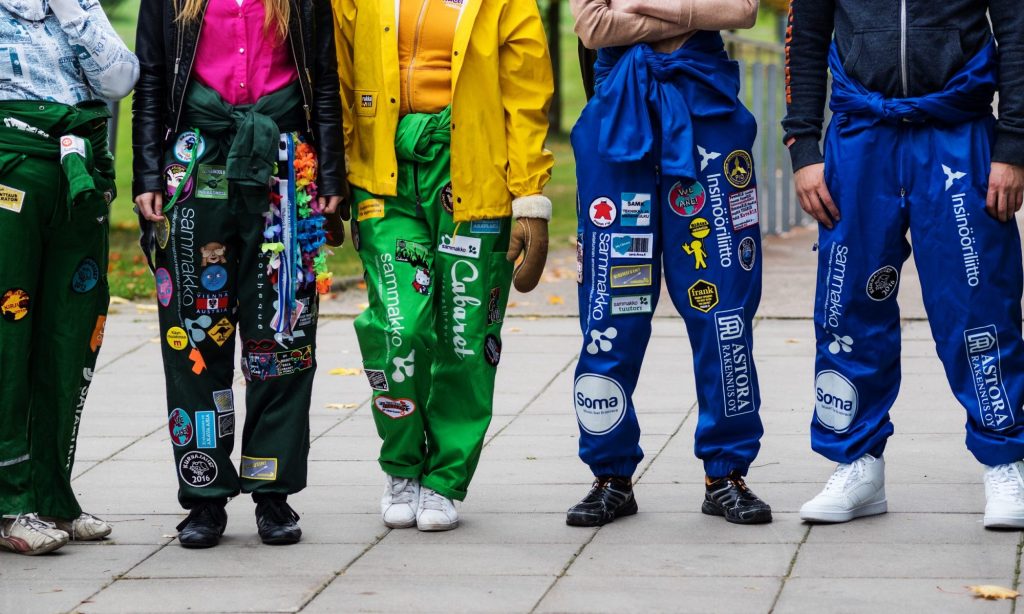
Figure 1. SAMK-opiskelijaelamaa-Haalarit (SAMK Matkailu, 2026)

As international nursing students studying in Pori, we want to share some tips on how to enjoy this amazing time while taking care of your health and finding your place in the community.

Before we talk about health, let’s explain some Finnish student traditions:

  • Haalarit: These are the colorful student overalls you see everywhere. Different colors mean different study fields.
  • Sima: A sweet, traditional Finnish drink made for Vappu. It is very delicious!
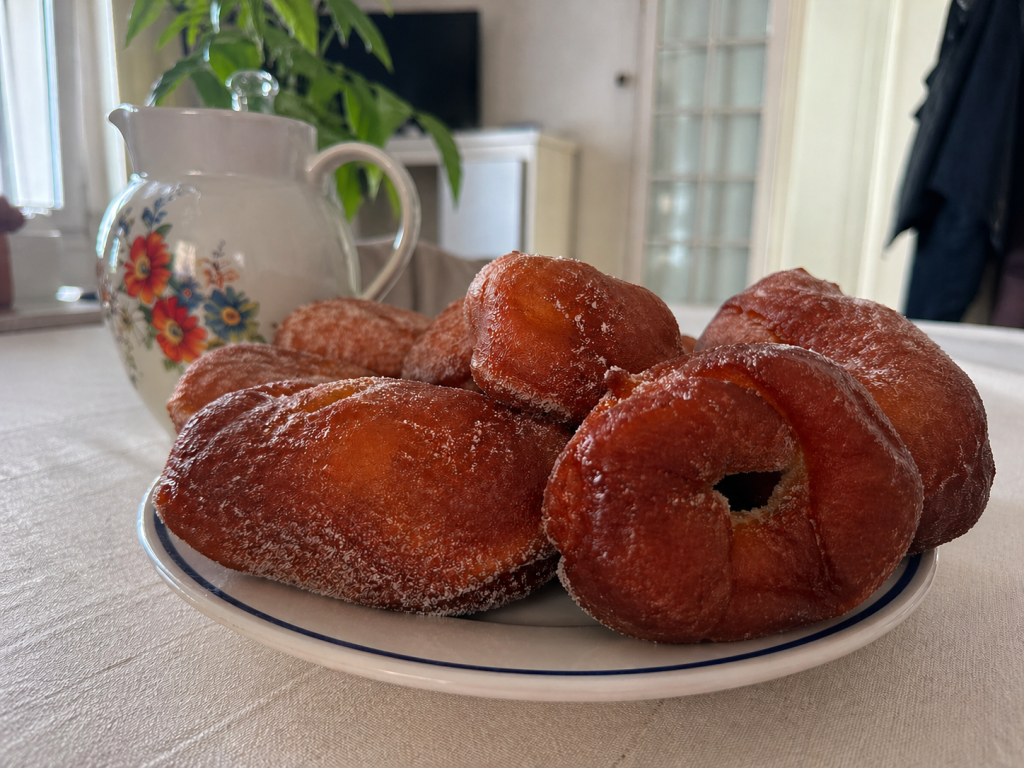
  • Munkki: These are sweet, deep-fried Finnish donuts covered in sugar. Eating a munkki with a glass of sima is a must-do Vappu tradition. They give you a great energy boost for the celebrations, but as nursing students, we remind you to enjoy them in moderation!

Figure 2. Vappu Munkki

Taking Concrete Action to Connect

When you move to a new country, it is easy to stay home, watch shows, and overthink. But Vappu is the perfect chance to take action! Step outside, meet local students, and immerse yourself in the community. You do not need to drink alcohol to participate; there are many fun, non-alcoholic events like picnics or café tours.

Choosing Positive Environments for Mental Well-being

Your mental and social health is just as important as your physical health. The World Health Organization (WHO) defines mental health not just as the absence of illness, but as a state of well-being where you can cope with the normal stresses of life and connect with your community (WHO, 2022).

During a long party season, the social atmosphere can sometimes get overwhelming. It is important to actively choose positive environments. Spend time with good friends who support you and make you feel safe. Studies show that strong social support lowers stress hormones and improves overall health. If an event feels too loud or uncomfortable, it is completely okay to leave. Protecting your personal peace is a great way to practice self-care.

A Nurse’s Evidence-Based Tips for Physical Health

As future healthcare professionals, we must remind you to take care of your body using evidence-based practices during the Vappu weeks:

  • Protect Your Sleep: You cannot attend every single party. According to the Centers for Disease Control and Prevention (CDC), adults need at least 7 hours of sleep per night to maintain a strong immune system (CDC, 2022). Chronic lack of sleep makes your body much more likely to catch viruses.
  • Hydration and Harm Reduction: If you choose to drink alcohol, remember that alcohol causes rapid dehydration. The WHO highlights that the harmful use of alcohol causes significant health issues (WHO, 2018). From a nursing perspective, “harm reduction” is key: pace yourself, and always drink one glass of water for every glass of alcohol. This keeps your kidneys functioning well and prevents severe hangovers.
  • Dress Warmly: Spring in Finland is still very cold, especially at night. Medical research shows that physical exposure to cold temperatures can lower your respiratory tract’s immune defense, making it easier to get sick. Always wear warm, windproof layers under your haalarit.

References:

Centers for Disease Control and Prevention (CDC). (2022). How Much Sleep Do I Need? https://www.cdc.gov/sleep/about_sleep/how_much_sleep.html

SAMK Matkailu. (2026). Matkailun koulutus ja hankkeet. https://matkailu.samk.fi/

World Health Organization (WHO). (2018). Global status report on alcohol and health 2018. https://www.who.int/publications/i/item/9789241565639

World Health Organization (WHO). (2022). Mental health: strengthening our response. https://www.who.int/news-room/fact-sheets/detail/mental-health-strengthening-our-responses

Student Self-Care and Intentional HealthyLiving: 7 Tips From a Nursing Student

Oludolapo Somoye (Nursing student)

A university student’s journey is not a relay race but a marathon. Therefore, taking the right steps, cultivating good habits, and building the future you have always dreamed of, one step at a time, is the way to go. You need not worry; everything will work out. These are seven practical suggestions for students who wish to actively lead healthy lives.

  1. “Let food be thy medicine; thy medicine shall be thy food.” — Hippocrates
    Try not to skip meals. Remember that you are what you eat, and food is the fuel your brain needs to work and concentrate. If you are too busy, cook simple meals, and yes, take advantage of the school restaurant’s services.
  2. “No water, no life. No blue, no green.” – Dr Sylvia Earle
    Hydrate! Always keep a water bottle with you. You want to ensure that it is constantly in use and never left empty. 🙂
  3. “Sleep is the best meditation.” – Dalai Lama
    Get enough sleep, and avoid all-nighters. The recommended minimum sleep duration is 7 hours per night. This helps your brain memory and makes learning better.
  4. “The only bad workout is the one that didn’t happen.” – Unknown source
    Stay active to keep your energy level up and prevent heart disease, type 2 diabetes, certain cancers, stroke, obesity, and early onset of dementia. You can make a habit of walking, cycling, dancing, or gymming daily. You can also do stretches in the middle of a class to avoid stiffness.
  5. “Prevention is better than cure.” – Desiderius Erasmus
    Know where the health centre is before the need for it arises. Regular check-ups and vaccinations, e.g., flu vaccinations, are also smart moves for preventing illnesses.
Tima Miroshnichenko: https://www.pexels.com/fi-fi/kuva/naine-kirjat-seisominen-opiskelija-6550399/

6. The saying goes…“Your mental health is just as important as your career or education.” – Unknown Source. But I want to add, “It takes a mentally healthy person to start or have a career.” Protect your mental well-being jealously. Find the best way to deal with stress. Engage in a fun activity! Something else besides studying. even if reading is one of your hobbies! 🙂 It’s beneficial to your mental health. You should always finish the day with a clear heart and a calm mind. Stay in a group of people who care about you and seek counselling when necessary.
7. I’d say that “Finger lickin’ good”—KFC—is more truthfully, “Crisis in every bite.” – My opinion.
Snack wisely. Yes to nuts, granola bars, and fruits! A definite no to sodas, energy drinks, junk food, and candies. (Or, at the very least, don’t use them frequently.)

On a final note, love who you are. It’s acceptable!

Cheers to a healthy you!


REFERENCES
Garcia-Garcia D. (2022) Health Promotion and Hydration: A Systematic Review About Hydration Care. Florence Nightingale J Nurs.; 30(3):310-321. doi:
10.5152/FNJN.2022.21313. PMID: 36106814; PMCID: PMC9623173.

Malhotra A, Mars JA, Baker J.(2025). Group Therapy. In: StatPearls. Treasure Island (FL): StatPearls Publishing; Available from:
https://www.ncbi.nlm.nih.gov/books/NBK549812/

Smith AP, Richards G. (2018) Energy drinks, caffeine, junk food, breakfast, depression and academic attainment of secondary school students. Journal of Psychopharmacology;32(8):893-899. doi:10.1177/0269881118783314

Trombetta et al. (2022). Influenza Viruses and Vaccines: The Role of Vaccine Effectiveness Studies for Evaluation of the Benefits of Influenza Vaccines.
Vaccines (Basel);10(5):714. doi: 10.3390/vaccines10050714. PMID: 35632470;PMCID:PMC9143275

Watson NF, Badr MS, et al. (2015). Joint consensus statement of the American Academy of Sleep Medicine and Sleep Research Society on the recommended amount of sleep for a healthy adult: methodology and discussion. Journal of Clinical Sleep Medicine.

https://www.infofinland.fi/en/health/mental-health#heading-eebbf7f1-05d2-4fc9-99ae-36a16c694fdc

Contributing to Healthcare Services as a Non-Finnish Speaker: Opportunities and Challenges 

Chau Dung

Source: Microsoft image bank

In 2025, Finland claimed the title of the world’s happiest country for the eighth year in a row—and it’s  not just about cozy saunas or beautiful nature. This happiness stems from strong foundations: income equality, education, economic stability, and most notably, health and well-being. Healthcare is a cornerstone of Finnish society, and as the population ages, the demand for healthcare professionals continues to grow. 

Finland has welcomed many international students to its English-taught healthcare programs. Some come with hopes of immigrating, others with plans to take Finnish expertise back to their home countries. While the education system is excellent, one major challenge remains: the language barrier. Communicating with patients and colleagues in Finnish can be daunting, making it one of the biggest hurdles for non-Finnish speakers in the field. 

But despite the challenges, non-Finnish speakers are not just surviving—they’re thriving. In this blog, we’ll explore both the hurdles and the many ways to meaningfully contribute to Finland’s healthcare system. 

1. The Value of Non-Finnish Speakers in Finnish Healthcare 

As the need for healthcare workers increases, non-Finnish speakers can play a vital role—not just by filling roles, but by enriching care through diversity. Cultural competence is a major asset. Professionals from different backgrounds bring unique views on health, healing, and caregiving. 

Some cultures approach health holistically or with a family-first mindset, offering valuable contrast to Finland’s more individual-centered care system. Others bring insight into religious and spiritual practices, dietary needs, or gender sensitivities that build trust and comfort with patients from diverse backgrounds. 

While language is essential, it’s not the only way to connect. Understanding, empathy, and cultural awareness can have just as much impact. 

2. Opportunities for Non-Finnish Speakers in Healthcare 

If you’re not fluent in Finnish yet, don’t worry—there are still many ways to start your career. Roles like nursing assistants, medical administrative staff, and allied health professionals (e.g., physiotherapy, radiology) often welcome English speakers, especially in urban hospitals or private clinics. 

There are also supportive and behind-the-scenes roles such as IT support, patient coordination, and research assistance. Volunteering is another excellent entry point. It helps you build experience, learn how the system works, and expand your professional network—all while easing into the language. 

Source: Microsoft image bank.

3. Overcoming the Language Barrier in Healthcare 

Let’s be honest: learning Finnish can feel overwhelming. But the more you immerse yourself, the easier it gets. And you’re not alone—there are many tools, programs, and supportive environments to help you along the way. 

Learning Finnish: One Step at a Time 

Universities and local education centers offer Finnish courses tailored for healthcare professionals, focusing on medical vocabulary and practical conversations. Language exchange programs are also a great way to practice and connect with locals. And if you’re short on time, apps like Duolingo, WordDive, or Yle Kielikoulu offer flexible learning options you can use anytime. 

Language-Adapted Training Programs 

Several healthcare institutions now offer hybrid training programs that blend practical healthcare education with Finnish language support. These programs ease the learning curve and help you develop the exact language skills needed for clinical settings. 

Supportive Workplaces Do Exist 

Not all roles require Finnish fluency on day one. Many international clinics, research labs, and hospitals operate in English or offer translation and mentoring support. Some even provide in-house language classes. It’s all about finding the right environment that values your skills—and helps you grow. 

4. Real Challenges Non-Finnish Speakers Face 

While the opportunities are real, the journey does come with its share of obstacles. Here are some of the most common challenges: 

Communication Barriers 

Explaining symptoms, understanding medical instructions, and participating in team meetings can be tough without strong Finnish. Even English-speaking environments can pose challenges when accents, idioms, or technical jargon come into play. 

Recognition of Qualifications 

Many skilled professionals face difficulties getting their foreign degrees or licenses recognized in Finland. You might need to take extra exams or complete bridging programs, which can feel discouraging—but they also ensure a high standard of care across the board. 

Cultural Sensitivity and Social Integration 

Every workplace has unspoken cultural norms. Not understanding them can lead to confusion or feelings of exclusion—especially during informal social moments like lunch breaks or team events. Miscommunication and lack of confidence in both verbal and written interactions (like emails or reports) can also lead to self-doubt. 

At institutions like SAMK and Soteekki, which host many international students, these challenges are common. But they can be eased with kindness, inclusion, and open communication. A simple coffee invitation or a small effort to bridge the cultural gap can go a long way. 

What Can Help? Honest Feedback and Openness 

One of the most valuable things Finnish colleagues can offer is constructive feedback—not only on Finnish language learning but also on workplace habits, conversation clarity, and cultural expectations. Sharing experiences and learning from each other fosters stronger, more empathetic teams. 

5. Success Stories and Support Networks 

Many non-Finnish speakers have built thriving careers in Finland’s healthcare system. Through resilience, mentorship, and strategic networking, they’ve navigated the challenges and found their place. Hearing these stories can inspire and guide others—so seek out support groups, alumni networks, and professionals who’ve walked the same path. 

If you’re a non-Finnish healthcare professional who’s found success here, consider becoming a mentor. Your story could be exactly what someone else needs to hear. 

6. How Healthcare Institutions Are Adapting to Multiculturalism 

Finnish healthcare providers are not standing still. Many are actively recruiting international professionals and offering integration support through relocation help, onboarding programs, and in-house language courses. 

Creating inclusive workplaces is becoming a priority. From diversity training to team-building activities that celebrate different cultures, institutions are working to ensure everyone feels valued and respected. Some even operate in English, making the transition smoother for international staff. 

It’s a sign of progress—and a glimpse of a future where multilingual, multicultural teams are the norm, not the exception. 

7. Tips for Getting Started in Healthcare (Even Without Perfect Finnish) 

If you’re passionate about healthcare and eager to contribute—even without perfect Finnish—there are plenty of ways to get started and grow your career in Finland’s healthcare system. It’s all about building your strengths, gaining experience, and finding the right environment that supports your journey.  

  • Build the Right Skills (Language Optional): Not all healthcare roles require full fluency in Finnish from day one. Consider focusing on areas that are more skills-based and less language-dependent, like medical technology, lab work, or certain allied health professions. There are many short courses, certifications, and degree programs offered in English that can boost your qualifications and make your CV stand out.  
  • Leverage Your Language Abilities: Do you speak another language in addition to English? That’s a huge asset! Finland’s patient population is becoming more diverse, and being bilingual or multilingual can help bridge communication gaps, especially in multicultural settings. Whether it’s helping a fellow international patient feel more comfortable or translating key information, your language skills can be incredibly valuable.  
  • Dive In Early—Through Volunteering or Internships: One of the best ways to understand how Finnish healthcare works is to get involved. Volunteering or interning in local clinics, hospitals, or community health organizations not only gives you hands-on experience but also helps you build a network. Plus, it’s a great way to slowly get used to workplace Finnish in a low-pressure environment. Everyone has something to offer—and even if Finnish isn’t your first language, your unique background, skills, and perspective are part of what makes healthcare stronger and more compassionate. With the right mindset and a little persistence, you’ll find your place in Finland’s healthcare community. 

Source: Mircosoft image bank.

Conclusion: Your Journey in Finnish Healthcare Starts Now 

Being a non-Finnish speaker doesn’t mean you’re on the outside looking in. You have value. You have skills. And most importantly—you belong. 

Yes, there will be challenges. But every day, international professionals are stepping into meaningful roles, helping patients, supporting colleagues, and shaping the future of Finnish healthcare. And you can be one of them. 

Ready to begin? 
– Explore volunteering or internships at clinics, hospitals, or NGOs. 
– Check out Finnish language resources like InfoFinland, Kela’s support services, and apps like Duolingo or WordDive. 
– Look for jobs or training at TE-palvelut and Job Market Finland. 
– Already working in Finnish healthcare? Share your experience in the comments—your story could inspire someone else. 

Picture source: Microsoft image bank.

Bright light lamps

Bright light lamps, do I need that?

When I – as a foreigner – heard about the bright light lamps for the first time, I was sceptical about it. I didn’t believe that these lamps should really help with my tiredness, as I didn’t even accept that my sleepiness was coming from the lack of sunlight (against what the lamps help). Nevertheless, I started reading about bright light therapy and started to see the logic behind it. Eventually, I tried working in front of such a lamp and it helped me a lot to get over my tiredness. So, in the following, you will see all the information, that made my try the lamp and an explanation on how to use it, if you get convinced, too!

Let’s start at the beginning. Every human being underlies different cycles, which influence sequences and processes in the body. Many of those cycles repeat themselves after one day. For that reason, they are called circadian (circa = about, dia = day) rhythms. One, for this article important circadian rhythm, is called sleep-wake cycle.

The sleep-wake cycle influences the human’s energy and activity levels and is affected by environmental cues, such as sunlight. Therefore, when the body is exposed to sunlight, serotonin is produced, generating alertness, and helping us to stay awake and active. At night, when the light outside diminishes, the internal clock initiates the production of melatonin, helping the organism to fall – and stay asleep.

However, what happens at this time of the year, as there is not much daily sunlight and most of the daytime is spend indoors? Logically, we won’t get enough sunlight. This causes an inadequate production of serotonin and melatonin, which in turn, leads to tiredness, fatigue, lack of motivation and in severe cases even to depression and insomnia.

This is where bright light therapy comes in. Bright light lamps mimic the natural sunlight and can therefore start serotonin and melatonin production, too. They replace the lost sunlight and help us to have more energy and positivity during the day and allow us to fall asleep easier at night. Thereby, bright light lamps can not only be used to replace lost sunlight due to the fall and winter season, but also help with various disorders such as SAD (= seasonal affective disorder), depression, dementia or even jet lag.

Finally, how should you use these lamps?

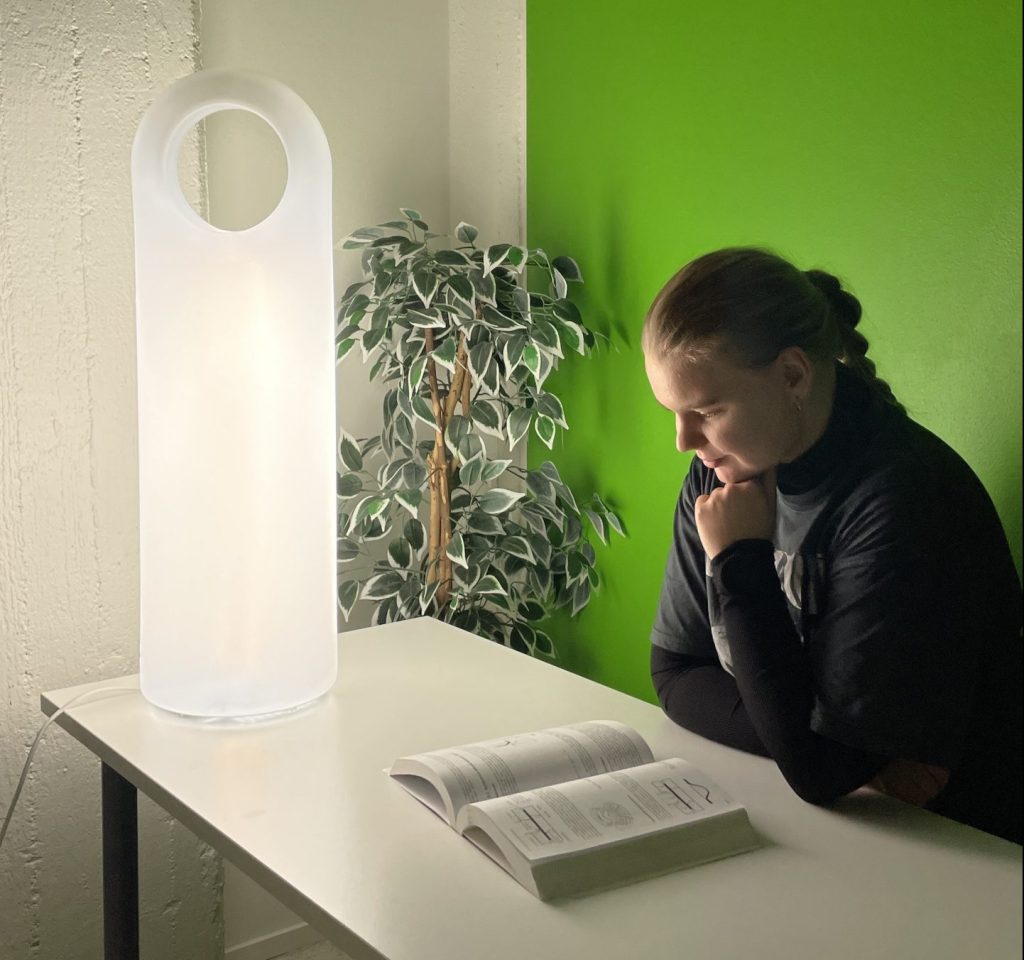
There is still a lot of research going on about that topic and it also depends on the reason for using the bright lamps. However, for the replacement of sunlight and activation of the body system, it is suggested to sit every morning at least 30min in front of the lamp. You should never look directly at the lamp, but your eyes should always be opened, so a simple reading, working or even eating would be possible.

If you now want to try it as well, you will find the bright light lamps in the SAMK Library every weekday (Monday to Friday). From Wednesday to Friday, there will be a program near the lamps from 08:00 to 10:00 am.

https://www.sleepfoundation.org/circadian-rhythm

https://www.day-lights.com/homepage/how-light-therapy-works/

Writers: Anna Hagmann, Vilma Kaisla & Jemina Nurminen

Parenthood in health care sector 

Combining work, study and family life can be a real challenge for many families and single parents. Many people think about family life with burning questions such as “Do I want children?”, “Will I have enough money to support a child?”, “What will happen to my job?” or “What will my future be like?”. People often think that once they have a child, the rest of their lives will come to an end and they will no longer have the time and energy to work, study or meet their friends. For these reasons, having a child is often portrayed in a negative light on social media. However, it is possible to reconcile studying, working, and having a family. Reconciling career, family and studies requires a family-friendly and non-discriminatory working life, equal responsibility for care, home and related meta-work, and quality early childhood education and other family services and support networks. It is therefore possible to dream of a new career and other things that matter to you, even in a family with children. Parenthood can create new and different goals and dreams. Creating a family does not have to mean breaking off a career or giving up dreaming. 

We conducted a little survey of parents who were studying at the same time. Our first question was about applying for a career in care. All respondents agreed that the care sector offers a good employment situation, their own interest in the sector and also the people-oriented nature of the sector came up in their answers. 

Having a child during studies was not perceived as a major problem, even though studies were postponed. Some had already completed courses in advance. Majority of the respondents are not currently in employment. 75% of the respondents felt that their own ability to cope was satisfactory and 25% good.  

We also asked about time use and need for help. All respondents needed a lot of help with their children. Help comes from for example their own parents. Time management is perceived to be good, although there is little contact with friends and other social life. In the care sector, pay has recently been in the headlines in the media. Most respondents felt that a carer’s salary is not enough to support a family. However, the combined income of themselves and their spouse is enough to support the family. People feel that they miss out on their children’s development when they are at school and working. 

Here’s another list of tips for coping with peak years 

1. Boost your self-esteem, for example by listing your successes. 

2. Recognise your limits and strengthen your resources, for example by identifying what makes you more resilient and energetic. 

3. Increase your self-esteem, for example by making a list of your strengths. 

4. increase your self-compassion and see the good side of things, for example by keeping a diary in which you write down three things every day that you are grateful for or that you think have gone well. 

5. Don’t be alone, seek support from your family, networks or society. 

Sources: 

https://www.mothersinbusiness.fi/tyo-ja-perhe-eri-elamantilanteissa

Tattoos in Social and Health Care

History of tattoos

It is impossible to say exactly where the tattoos came from. Tattoos have been done for a long time all over the world. Tattoos have been widely associated with crime and in the past tattoos have been used to mark prisoners, soldiers, sex workers and others.

The earliest signs of tattoos can be seen as far back as 10 000 years in different human cultures. Different tattoo cultures exist in different parts of the world. Tattoos have appeared in Europe as early as the 1700s and 1800s. The so-called “new tattoo” appeared in the West in the 1960s and in Finland later. The purpose of the modern tattoo is to shape the body and to reflect the individual’s own identity.

In ancient times, tattoos were made by breaking the skin of the area to be tattooed with a fish tooth, a sharp stone, a sharpened bone, or a wooden stick. It was not until the 1700s that the Maori (or indigenous people of New Zealand) began to use metal needles to tattoo, making the images more symmetrical.

In Finland, the first official tattoo studios were established only in the late 1980s, because until then the health authorities refused to give permission, citing health concerns.

Tattoos today in Social and Health Care

Today, tattoos have become more common in the world and their visibility in the street scene is quite widespread. People’s attitudes towards tattoos have changed over time, as tattoos have become part of people’s identity and many people want to express themselves through their images.

Previously visible tattoos may have had an impact on getting a job and may have prejudiced the jobseeker. For example, tattoos may have been associated with crime, different religions and even evil spirits. Today, there is a more tolerant attitude towards tattoos and tattoos should not affect access to employment in the social and health sectors. However, some people, especially older people, may still have assumptions about tattoos.

Benefits of Tattoos in Social and Healthcare

Tattoos are body modifications, body art or art therapy.

  • Individuals with tattoos have a high esteem or self-image.
  • Improves the individual’s perception about themselves.
  • Gives individual the feeling of belonging to a community that is important to them.
  • Boost the immune system because when you get a tattoo your body believes you’re being wounded, thus your immune response kicks into gear and your body acts to defend you from invaders, heal the wound and protect you.
  • Getting tattoos helps you to adapt to stressful situations and potentially enhance the body to release less cortisol under future stress (HUSH Anesthetic, 2021).

Risks of Tattoos in Social and Healthcare

  • Persons with tattoos can experience discrimination, depreciation and prejudice.
  • The application process damages the skin causing blood clot around the broken blood vessels and creating a bruise.
  • Causes aseptic inflammation.
  • Can cause allergic reactions and hypersensitivity due to the tattoo ink because the inks contain substances that can cause allergies (green ink-chromium, blue ink- cobalt and yellow ink-cadmium)
  • Tattoos can lead to keloids which are formations of fibrous scar tissue caused by excessive tissue repair in response to trauma or incision.
  • Tattoo colors promote cell stress and weaken mitochondria function. For instance, the black tattoo dye contains benzopyrene, phenol concentrations and polycyclic aromatic hydrocarbons that reduce the mitochondrial activity of the skin cells thus limiting its health.

Soteekki students interviews

Anonymous

  1. What tattoos means to you?

Tattoos are means of self-expression and what I like. I want to showcase my relationship with my family through them.

  • What kind of reactions you have got from clients or colleagues about your tattoos?

Most of them thought it’s cute as they were small and not overly complicated in design.

  • What word comes first in your mind when you hear a word “tattoo”?

Self-expression.

  • What is your motivation for doing tattoos?

Memories that I always want to cherish.

Yalin

  1. What tattoos means to you?

It means that they’re a part of me and they all have individual meanings that’s why I got them.

  • What kind of reactions you have got from clients or colleagues about your tattoos?

Most of them thought it was cool that I got, and some said it was a shame that I inked my skin, asked me why I would do that to myself which was mainly older people.

  • What word comes first in your mind when you hear a word “tattoo”?

I think about myself when I hear it.

  • What is your motivation for doing tattoos?

I started when I was 17 and I started doing it because of my father who passed, but I couldn’t stop getting them after that.

Lähteet

https://www.ncbi.nlm.nih.gov/pmc/articles/PMC5868782/

https://www.ncbi.nlm.nih.gov/pmc/articles/PMC5632599/

https://hushanesthetic.com/blogs/community/health-benefits-of-tattoos

http://www.artlinetattoo.com/

International Week of Happiness at Work 19th – 25th September 2022

This week we celebrate the international Week of Happiness at Work. It was started in 2015 by two Dutch women, Fennande van der Meulen and Maartje Wolff. The purpose of the week is to include happiness in the work environment and in this way improve the well-being of employees.

We found out which things in particular make people feel comfortable and happy at work, and we also wanted to put together tips so that everyone could influence it themselves. It has been studied that well-being and happy employees are more loyal, more cooperative, more productive and more creative.

What things help employees to be happy at work?

Many things can be directly linked to the supervisor’s behavior and way of leading, but every employee also has a big responsibility for their own behavior and for creating the work atmosphere. It must be remembered that each employee values the things that affect his or her comfort at work. For example, for some, a good salary and a permanent employment are more important than other things besides that.

  • Treating every employee equally, regardless of their skills or backgrounds. Here is a good example where both supervisor and employees can influence.
  • Advancement opportunities give employees more motivation to perform their work. Motivation is one of the biggest ways to keep employees interested.
  • A sufficient amount of resources, so that employees feel that they can focus on the work itself, and no energy is spent on sorting through the chaos. By taking this into account, work burnout is also avoided.
  • The versatility of the work increases meaningfulness and gives opportunities to do different tasks. In this way, employees are also able to develop themselves, and do not become passive.
  • Flexibility in the workplace and among employees gives a feeling of appreciation. It can be seen even in small things, such as giving the employee the opportunity to express free wishes, or even the freedom to plan their own working days and weeks.
  • Appreciation of employees and an open conversational atmosphere enables freer discussion, which also makes it easier to resolve conflicts. The mutual appreciation of employees develops slowly, sometimes to progress you may need help from the management.
  • Organizing social events is an excellent way to help employees build friendships with each other. Even if the employees would’t be close friends, good relationships help the open atmosphere mentioned earlier.
  • Good employment benefits, such as sport and culture vouchers, are an excellent way to support the employee’s free time, and give the employee the opportunity to choose the preferred destination for using the vouchers.
  • Being recognized and rewarded for one’s work gives the employee the feeling that the work they do is important.
  • A positive way of communicating increases the reception of information. The supervisor can increase the positive working atmosphere at the workplace, e.g. by walking with a smile and talking constructively.

We wanted to share tips that would help everyone at work improve their well-being and in this way increase their happiness at the workplace.

In addition to good social relationships, nutritious food and enough sleep help you cope at work. Outdoor activities, fresh air and exercise give us more energy than you might think. Many times after a working day you feel tired and the couch is tempting, but we still encourage you to take a little break outside, for example a short walk.

Our own attitude is one of the biggest indicators of the course of our day. The twists and turns in private life and the balance are reflected in everyone’s work self. We can’t influence everything, and not everything always goes the way we want, but we can change our attitude and the way we see things.

The members of Sotekki wish you a happy working week!

Mental health and wellbeing (part 2/2)

Written by nursing student Tatenda Malan

This blog post is based on a podcast episode of Mental health and wellbeing made by Service centre Soteekki and is published on September 5th, 2021. Podcast is part of the StudyWell-project, by the students for the students and staff of SAMK. You can find original Podcast here (link) www.campusmowe.fi/podcast. In this episode special quest Katja Warwick-Smith was interviewed by physiotherapy student Andrew Warwick-Smith. This text includes direct quotations from the interview just to make sure the meaning is not being changed or misunderstood.

Katja Warwick-Smith is the Assistant Executive Director of Clinical Service Development Mental Health with Hamad Medical Corporation (HMC), Doha, Qatar. Katja Warwick-Smith is a mental health expert with many years of experience in Finland, UK and Qatar. Currently, She leads HMC’s virtual mental health services, including the National Mental Health Helpline.

None of this is rocket science. Probably nothing new. However, we all need reminders on regular basis, because we’re human beings and life does get very busy. When we talk about well-being, it really is about things that bring a smile on our face, distracts our mind and is sustainable and those are kind of the core elements. We all have our unique preferences. What gives us that sense of wellbeing and happiness. Here are a couple of coping strategies that have a lot of evidence behind them.

Stay connected

According to a recent study, social networks are number one protective factor against depression. So, keep you your social network close. Improve your social connections and connectedness.

When we talk about detaching from our networks, it doesn’t happen overnight. We’re really busy we’re tired working long hours, whatever it might be. Looking up to the children, whatever you know, the friend calls and says, “let’s go for a coffee”, we might say, “Oh to be honest, I’m really tired. I just want to watch a movie or something”.

It’s okay, every now and then but just pay attention that you know all of a sudden you don’t realize that “oops! I haven’t actually seen anyone for weeks and weeks”. When you’re on your own and you have troubles and things in your mind, you ruminate on them. You keep thinking about them and they actually grow much bigger than what they really are.

When we are with friends, we never mind, distract, also speak, ventilate get it out of the system, and that can help to put things into perspective. Hopefully that friend will also help. You laugh a little bit because laughter actually releases the happy hormones that will tackle your stress hormones and it helps you to clear your mind from whatever it is that has been troubling you. It’s really important to stay connected.

Exercise

My personal, absolute favourite, coping strategy is exercise. I’m sure everyone has heard this one before, but the benefits are really evident in literature. You know when you have stress that peaks up, your body releases the stress hormones. In other words, you go to flight or fight mode, and that is what makes you stronger and faster and better at decision making, but those stress hormones pretty much impact every major organ in your body.

When we exercise, not only does it burn out those stress hormones at the time, in other words, helping your muscles to relax and helping you to feel that sense of well-being. But the evidence clearly shows that when you exercise regularly the next time your stress peaks, your body releases, less stress hormones, and that is actually a really important protective fact. Because um, you know, if you think about with the stress hormones your bowels and blood pressure go up, but if you’re on that peak all the time, you risk a cardiovascular event.

Eventually, if you have that hyped up a situation all the time, your body is releasing more glucose to give you more strength. Well, eventually, you risk diabetes. Every single organ is affected and hence exercise not only helps you in that immediate situation, but also protects you later on thinking going forward and with well-being. Nothing is about perfectionism. You don’t have to pay a lot of money for a gym. You never wanted to go to run around the house, throw the kids around that will make all of you laugh a lot. You know dance in the kitchen when you’re cooking, anything that breaks a little bit of a sweat makes you feel good and puts that smile on your face, that is, about well-being and making sure that it’s sustainable.

Mindfulness

If you don’t have time for that, do something that you have time for. Another thing is about taking notice. This is known as mindfulness. It is very popular stress management strategy. There are all sorts of apps, very good websites and trustworthy ones. It’s all about being present in the moment and again it’s about clearing all those troubles out of your mind and paying attention to where you are.

When you go for the walk in that park, don’t think about what happened at work today or what will happen tomorrow? Look around! What are people wearing? How green is the grass. What colour is the sky? It’s all about being present, and psychologists call it everyday mindfulness.

When you brush your teeth, don’t think about anything else, except which tooth have I brushed. Did I do it well? I need to do a little bit more there. It’s about being present and focusing on whatever it is that we’re doing, and these are the moments that help us zero in.

In other words, we have peaked with our stress and we talk about accumulative stress throughout the day when we regularly take moments to bring it down. The total stress doesn’t build up to quite so high, which again protects us both psychologically and physically.

Another really well evident strategy is about learning and again with well-being. It’s not about your master’s or PhD. It’s about something little. First of all, focus your mind because you can’t learn if you don’t concentrate. Furthermore, it can give you a great sense of achievement when you actually do learn that you know one word in a different language per day or something manageable.

One really good thing to keep in mind is kindness. You know giving to others saying, thank you, smiling at a stranger. You know it makes us feel good when we see that response, and we have just given someone else, a very positive message.

Diet

you just can’t talk about well-being without mentioning these one of them is diet. wellbeing is not about perfection. Go crazy, every now and then with the takeaway, but make sure you have some healthy structures in your diet, and one really important thing to remember is that ongoing stress brings down our immune system. We need that healthy diet to push it up. Of course, you know if we have heavy meals and so on, we feel tired and bloated and that’s not a sense of wellbeing either. So little things like thinking about have you had your veggies and fruits today can make a big difference.

Sleep

If we have a heavy meal late in the evening that can affect the quality of our sleep. Sleep is the final point. Rest is the time when our body and our mind charge the batteries. I know we all get busy, don’t always get enough sleep

It really is about those conscious choices, and you know again, nobody can do it for us. We have to go through this process of stop self-check. How am I doing am I getting worked up? Where am i on that continuum of feeling on top of the world, or feeling that I’m overloaded and overwhelmed when we recognize something is going on? What’s triggering this, what’s causing me to feel this way?

If you can deal with it deal with it, take a few hours just to sort it out, and that stress is gone. If you can’t resolve it, refocus your efforts to managing actively that stress that it’s causing and when you accept that okay, you have something you can’t change, you tell yourself, I can’t change it at the moment, but it will be okay, don’t know when, but it will get better and that’s a really powerful little psychological threat.