

By- Uthpala Weerawickrama Gunawardane
Communication is an essential part of social and healthcare work. We often think of communication as speaking and listening. However, it involves much more than words.
People communicate in many ways. We can use speech, facial expressions, gestures, body language, eye gaze, pictures, signs, sign language, writing, touch, technology, etc. Some people use several methods at the same time, while others may depend on particular way of communicating.
This is especially important in healthcare because successful communication is very important at every step of the care journey. Every client is different and unique. Some people may have difficulties with speaking, hearing, understanding language, or expressing their needs. They may have these difficulties because of physical or mental health conditions. This does not mean they have nothing to communicate.
Sometimes we just need to find another way to listen.
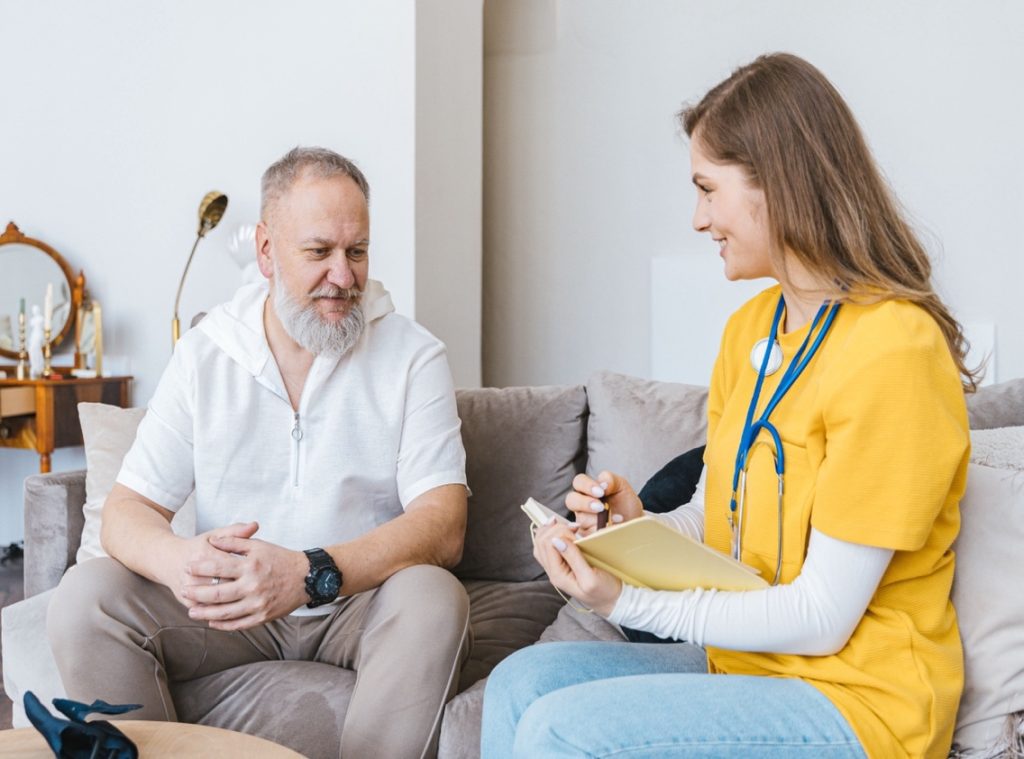
ILLUSTRATIVE PHOTOGRAPH. PHOTO SOURCE:PEXELS.
COMMUNICATION IS MORE THAN WORDS
Have you ever noticed that someone says they are fine, doing well, or that there is nothing to worry about, but their facial expression or behaviour tells us something different?
A person may say, “Fine,” but perhaps they are unusually quiet, look worried, or behave differently from usual.
Non-verbal communication includes facial expressions, eye gaze, gestures, body movements, and posture. These can give us useful information about what a person is communicating. However, we should be careful not to make assumptions. The same gesture can mean different things to different people.
Instead of deciding how a person feels, we can notice the change and ask respectfully.
For example we can ask,
“I notice that you are quieter today. Would you like to tell me how you are feeling?”
The Finnish Memory Association (Muistiliitto) highlights the importance of non-verbal communication, including facial expressions, gestures, and touch, particularly when a person with a memory disorder has difficulties with speech or understanding language.
Observe, but do not assume. Ask and listen.
EVERYONE COMMUNICATES DIFFERENTLY
There is no single communication method that works for everyone.
Some people communicate mainly through speech. Others may use speech together with gestures, pictures, or signs. Some people may use AAC (Augmentative and Alternative Communication).
AAC can include pictures and symbols, communication boards, gestures and signs, writing, electronic communication devices, or eye gaze.
These methods can help a person express their needs, wishes, feelings, and choices.
For example, a client may find it difficult to answer the question, “What would you like to do today?” Instead of expecting a spoken answer, we could show pictures of different activities. The client can then point to or choose the activity they prefer. This gives the person another way to participate and make their own choices.
The UK organisation “Sense” describes communication as something that can involve many different methods, including speech, signing, gestures, pictures, objects, touch, and technology.
Communication should adapt to the person, not the person to the communication method.
PICTURES, SIGNS, AND SIGN LANGUAGE CAN MAKE COMMUNICATION EASIER
Pictures, symbols, and sign language can make communication easier, especially when communicating with words is difficult.
Pictures and symbols can help a person express what they want or do not want, which activities they prefer, how they feel, and what they need.
Simple signs or sign language can also support communication and help a person express themselves more clearly.
Visual communication can also make information easier to understand. For example, instead of explaining an activity verbally, we can use pictures to show the different steps. This can make situations clearer and support the client’s independence and participation.
The World Health Organization (WHO) emphasises accessible, person-centred communication that responds to people’s different needs.
The purpose of communication is not only to exchange information but also to give every person an opportunity to express themselves.
LISTENING IS ALSO COMMUNICATION
Good communication is not just about talking but it is also about listening.
In a busy healthcare environment, it can be easy to focus on completing tasks quickly. However, sometimes a client needs more time to find the right words, answer a question, or show what they mean.
We can support communication by:
- giving the person enough time.
- listening without interrupting.
- using simple language.
- asking one question at a time.
- checking that we have understood correctly.
- encouraging the person to ask questions.
- using pictures or gestures when needed.
For example: “Could you tell me in your own words?” or “Did I understand correctly?”
These simple questions can help prevent misunderstandings.
The WHO recommends checking whether people have understood the information and being patient when communication takes more time.
SIMPLE LANGUAGE MATTERS
Healthcare professionals often use medical and professional terminology. These words may be familiar to us but difficult for clients to understand. When communicating with a client, we should always use simple and clear language instead of professional terms.
Instead of giving a long explanation, we can make communication easier by:
- using familiar words.
- explaining one thing at a time.
- avoiding unnecessary medical terms.
- using examples.
- using pictures when helpful.
- asking whether the client has understood.
WHO’s communication guidance recommends using plain language, familiar languages, and visual elements to make health information easier to understand.
Communication is successful not when we have explained something, but when the other person has understood it.
THE IMPORTANCE OF TOUCH
Touch can also be part of communication.A gentle and appropriate touch may communicate support, reassurance, or presence.
The Finnish Memory Association (Muistiliitto) describes touch as one form of non-verbal communication and highlights its possibleimportance when communicating with people living with memory disorders.
However, touch is personal. People have different preferences, cultural backgrounds, and boundaries. Therefore, we should always consider the person’s comfort and wishes.
Good communication means respecting the person’s boundaries and adapting our actions to the individual.
COMMUNICATION AND PEOPLE WITH MEMORY DISORDERS
Communication can become more difficult for people living with memory disorders. A person may have difficulty finding words, understanding questions, or expressing what they want.
Communication does not have to stop in these situations. We can use familiar photographs, music, objects, gestures, facial expressions, simple questions, familiar routines, or appropriate touch. Familiar things can sometimes support communication and create meaningful moments. For example, a photograph of a familiar place may encourage memories and conversation.
The aim is not always to have a long conversation. Sometimes, a shared moment is enough.
COMMUNICATION AND INDEPENDENCE
Communication is closely connected to independence.
Imagine being unable to tell someone one of these things:
“I don’t want this.” or “I want to go outside.” or “I’m in pain.”
Having a way to communicate these things is important for a person’s dignity and participation. This is why pictures, signs, writing, communication boards, and other AAC methods are not simply “extra tools.” For some people, they are essential ways of expressing themselves.
WHO’s disability-inclusive health guidance emphasises communicating directly with the person, asking how they prefer information to be presented, and recognising the person’s own knowledge about their needs.
The goal is not to speak for the client. The goal is to support the client in speaking for themselves, in whatever way works best for them.
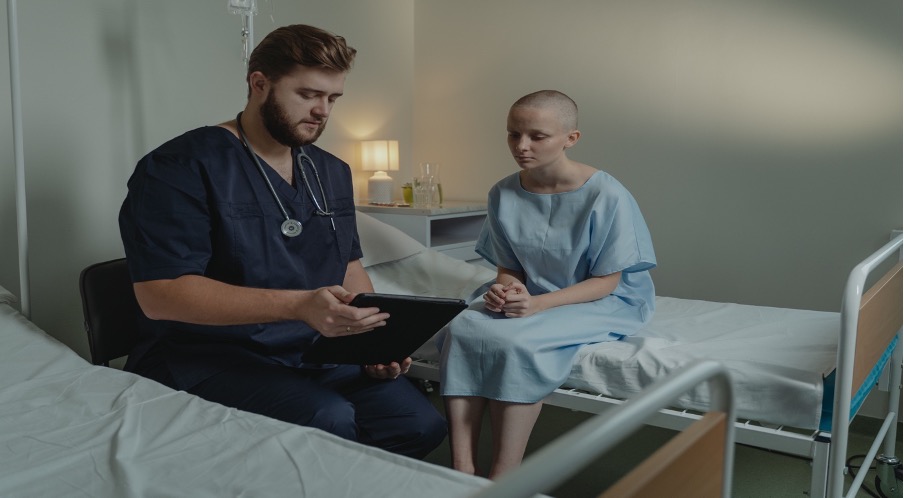
Illustrative photograph. Photo source: Pexels.
RESPECT, DIGNITY, AND AUTONOMY IN COMMUNICATION
One important lesson for healthcare students is that we should not make decisions for a client based only on our interpretation of their behaviour.
- If a client is quiet, we should not automatically assume that they agree.
- If a client moves slowly, we should not automatically assume that they are tired.
- If a client does not answer immediately, we should give them time.
- If we are unsure, we can ask questions or try another communication method.
The WHO recommends focusing on the person, communicating directly with them, and checking their understanding rather than making assumptions about their needs or abilities.
This is closely connected to respect, dignity, self-determination, and autonomy.
COMMUNICATION IN A MULTICULTURAL ENVIRONMENT
Soteekki is also a multicultural learning environment. Students, professionals, and clients may have different first languages and cultural backgrounds.
For international students, communicating in Finnish can sometimes feel challenging. You may know what you want to say but need more time to find the correct Finnish words. It is okay to ask for help.
Some useful phrases we can use are:
- “Voisitko puhua vähän hitaammin?”
Could you speak a little more slowly? - “Voisitko toistaa?”
Could you repeat that? - “En ymmärtänyt. Voisitko selittää uudelleen?”
I didn’t understand. Could you explain again? - “Ymmärsinkö oikein?”
Did I understand correctly?
The WHO also emphasises using familiar languages and adapting communication to the needs of the intended audience.
Good communication does not require perfect language. It requires patience, respect, listening, and a willingness to understand each other.
FINAL THOUGHT
As future professionals in social and healthcare services, we should remember that communication is a shared process.We need to adapt our communication to the individual person and give them opportunities to express their own wishes, needs and feelings.
When words are not enough, communication does not end. We simply need to find another way to listen and give the person a chance to be heard.
References
- Avustajaklinikka. (2026, September 17). Miksi sanaton viestintä on ratkaisevaa avustustilanteissa? Avustajaklinikka.
- Communication Hub. (n.d.). Ways we communicate. Communication Hub.
- ECL. (2026, September 22). Beyond words: Why every way of communicating matters. https://www.ecl.org/media-area/blog/beyond-words-why-every-way-of-communicating-matters
- Muistiliitto. (n.d.). Kosketus ja sanaton viestintä. Muistiliitto.
- Sense. (n.d.). Ways of communicating. Sense.
- University of Mississippi Medical Center. (n.d.). Alternative means of communication. University of Mississippi Medical Center.
- World Health Organization. (n.d.). Module 4 Part 2: Strategies and good practices in disability-inclusive communication in health care. World Health Organization. https://iris.who.int/server/api/core/bitstreams/b90d6e84-171a-4ebf-aaae-77828c5d779a/content